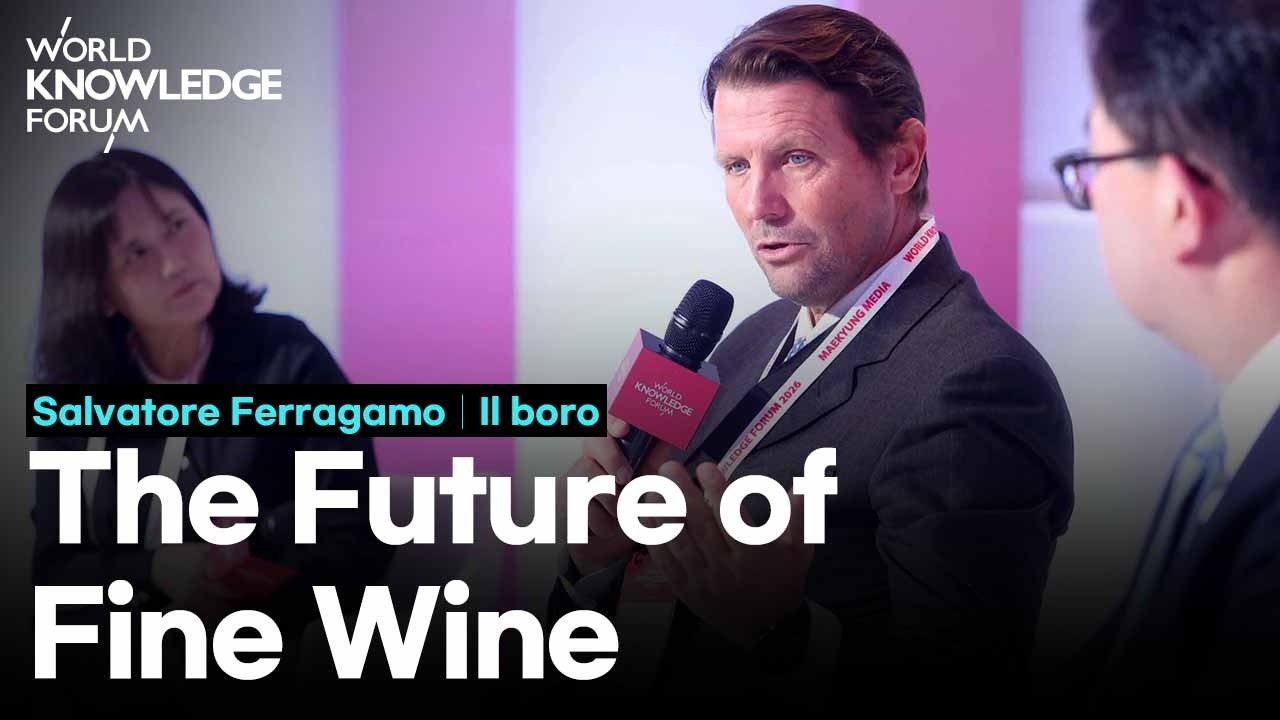
The Future of Fine Wine: Sustainability, Heritage, and Emerging Markets
Title history
- The Future of Fine Wine: Sustainability, Heritage, and Emerging Markets — observed on 20261026-1551 UTC (YouTube)
Keywords
Summary
181 words
Critical Evaluation
Value of the Information & Strength of the Argument
The value of the information lies in first-hand perspectives from key industry players, particularly on how heritage and marketing interact in the luxury wine segment. Ferragamo’s emphasis on organic production and hospitality as economic synergies offers a concrete business model. Hori’s insights about the Japanese market’s stability and the role of education in maturing a market are pragmatic and evidence-based from his experience. However, the argumentation is largely anecdotal, with no statistical data or scientific references. Claims about sustainability’s impact on quality are asserted but not substantiated. The discussion remains at a high strategic level, lacking deep analysis of climate change effects or specific market figures. Overall, the arguments are coherent and internally consistent, but the lack of external evidence weakens the overall reliability.
Scientific Rigor, Source Quality, Title Accuracy
The panelists rely on personal experience and brand narratives rather than cited sources. No external references are given in the video or description, so scientific rigor is low. The title is well-matched to the content, covering sustainability, heritage, and emerging markets, but the depth is limited. The discussion is a typical industry panel, not a scientific presentation. No comments were provided, so public reception cannot be assessed.
206 words
Title / Content Match
The title accurately reflects the panel's focus on sustainability, heritage, and emerging markets, though the discussion remains surface-level.
Quality & Reliability
6/10
Panel discussion with industry practitioners, offering practical insights but limited rigorous data or citations. Participants speak from experience, but claims are not backed by robust evidence.
Key Moments
Markers derived by PSI from the transcript: the creator did not define chapters.
- Introduction of Il Borro estate and Ferragamo's background
- Discussion on heritage and succession in the wine business
- Hori explains Enoteca's approach to building trust and cultivating wine culture
- Comparison of Japanese and Korean wine markets, convenience store wine debate
- Discussion on premium wine definition and the role of hospitality and storytelling
Contribution & Novelties
The panel provides an industry insider view on how heritage and sustainability are integrated in a luxury wine estate, and how a distributor in a mature market uses education and events to maintain consumer engagement. The novel angle is the direct comparison between a legacy brand and a non-legacy distributor, revealing differing strategies for building trust.
Pour aller plus loin :
- Sustainable agriculture — Overview of sustainable farming practices relevant to the organic methods discussed.
- Terroir — The concept of terroir is central to the panel’s claims about quality and authenticity.
- Organic wine — Details on certification and production standards mentioned by Ferragamo.
- Wine tourism — The hospitality model at Il Borro as a strategy for brand building.
118 words
Radar Profile
The radar profile shows moderate scores across information quantity, quality, and reliability, but low technical depth. This reflects a business-oriented panel discussion that offers practical insights without deep scientific rigor.