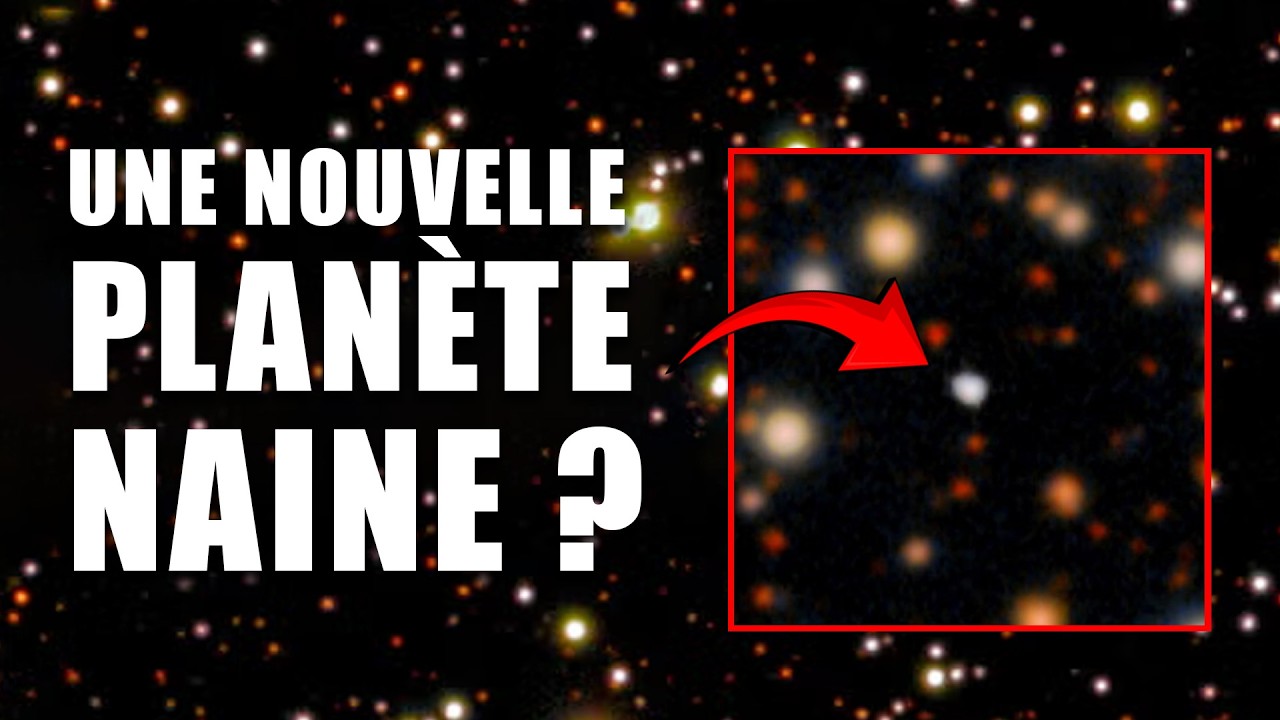
Un NOUVEAU MONDE découvert dans le SYSTEME SOLAIRE ! DNDE
WHERE 3 NOV
Title history
- Un NOUVEAU MONDE découvert dans le SYSTEME SOLAIRE ! DNDE — observed on 20261103-1737 UTC (YouTube)
Keywords
Summary
132 words
Critical Evaluation
Value of the Information & Strength of the Argument
The video provides high informational value by synthesizing multiple recent announcements with clear scientific explanations. The argumentation is solid, relying on official sources (NASA, CNES, Rubin Observatory) and peer-reviewed data (arXiv preprint). The presenter explains methodological uncertainties, such as albedo assumptions for size estimates, and distinguishes confirmed facts from hypotheses. The coverage of Hubble servicing includes commercial proposals and realistic constraints, while the Chinese section offers concrete milestones. The overall reasoning is logical and well-supported.
Scientific Rigor, Source Quality, Title Accuracy
The video demonstrates rigorous sourcing by providing links to primary references in the description, including an arXiv paper, Rubin Observatory news, NASA pages, and official Chinese news. The scientific content aligns with these sources. The title is slightly sensationalist but remains accurate as the discovery is a highlight. The content covers multiple topics beyond the title, but the adéquation is acceptable.
151 words
Title / Content Match
The title emphasizes the discovery of a new dwarf planet candidate, which is the opening topic, but the video also covers Hubble servicing, Chinese lunar missions, and Callisto tests. The title is a bit narrower than the actual content.
Quality & Reliability
8/10
The video is a well-structured news review with references to primary sources (arXiv, observatory, NASA) and provides accurate scientific context. Minor uncertainties remain on size estimates due to albedo assumptions, but the presentation is rigorous.
Key Moments
Markers derived by PSI from the transcript: the creator did not define chapters.
- Introduction to new dwarf planet candidate discovered by Vera Rubin Observatory
- Details on detection method and size estimates for 2026 ED138
- Discussion on Hubble's aging and NASA's plans for commercial servicing
- Overview of Chinese lunar precursor missions and architecture for crewed landing
- Introduction of Callisto rocket demonstrator and ground tests in French Guiana
- Concluding summary and future implications
Cited Sources
- Rubin discovers first dwarf planet candidate — Official press release about the discovery
- arXiv preprint on 2026 ED138 — Scientific paper detailing the detection
- NASA explores potential commercial servicing for Hubble — NASA announcement about Hubble servicing study
- CRI News on Chinese lunar program — Chinese state media report on lunar missions details
- CNES LinkedIn post on Callisto — CNES update on Callisto ground tests
- Podcast on Spotify — Link to podcast version of the show
Concurring Sources
- NASA's official Hubble page — Provides official status updates on Hubble, aligning with video's information.
Contribution & Novelties
The video’s original contribution is its synthesis of several recent space news items into a coherent narrative, highlighting the significance of the Vera Rubin Observatory’s discoveries for understanding the outer solar system and testing the Planet Nine hypothesis. It also situates technical developments like Hubble servicing and Chinese lunar plans within the broader context of space exploration.
Pour aller plus loin :
- Vera C. Rubin Observatory — Overview of the observatory and its survey mission.
- Dwarf planet — Definitions and criteria for dwarf planets.
- Hubble Space Telescope — Detailed article on its history and challenges.
- Chinese Lunar Exploration Program — Overview of China’s lunar missions.
- Callisto (rocket) — Article on the reusable rocket demonstrator.
114 words
Radar Profile
The radar profile shows a balanced performance with notably high scores in information quantity and reliability, reflecting the video's comprehensive coverage and use of authoritative sources. Technical level is moderately high, while quality and fiabilité are strong, consistent with a well-produced science news review.