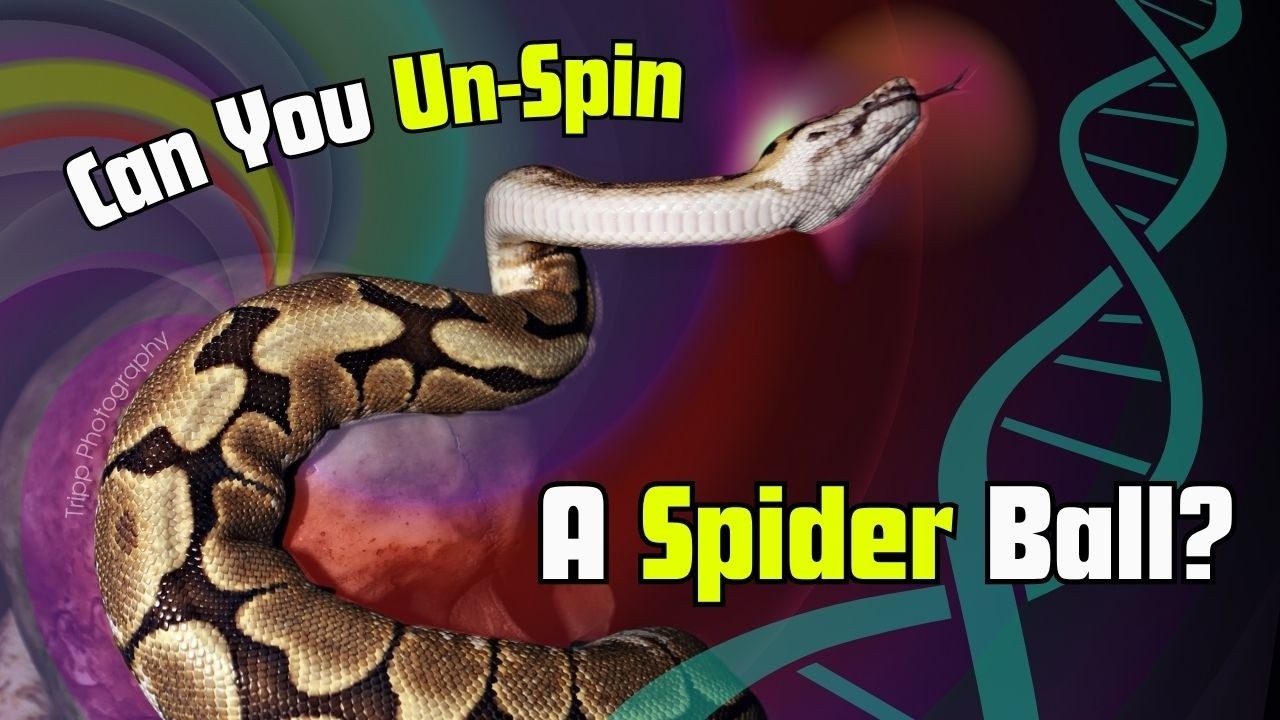
Spider Ball Pythons & Pleiotropy! | Reptile Genetics Weekly Ep 167
Title history
- Spider Ball Pythons & Pleiotropy! | Reptile Genetics Weekly Ep 167 — observed on 20261028-0022 UTC (YouTube)
Keywords
Summary
206 words
Critical Evaluation
Value of the Information & Strength of the Argument
The video provides valuable educational content on a niche topic in reptile genetics, clearly explaining pleiotropy with accessible analogies and relevant examples. The hosts effectively connect the genetic mutation to observable traits, supported by references to scientific studies. The argumentation is logical and well-structured, progressing from general principles to specific cases, and they acknowledge uncertainties where appropriate. However, the commercial promotions for their testing services are interspersed throughout, which, while not detracting from the scientific content, may be seen as a potential conflict of interest. Overall, the information is substantive and presented in an engaging manner.
Scientific Rigor, Source Quality, Title Accuracy
The scientific rigor is commendable; the hosts cite credible sources, including a specific 2022 study, and discuss anatomical evidence. They are careful to distinguish established facts from hypotheses. The sources mentioned are primarily the presenter’s own company resources and the cited study, but they also reference other researchers and breeders for sample contributions. The title accurately matches the content, and the episode stays focused on its subject. No obvious discrepancies were noted between the title and the delivered material.
190 words
Title / Content Match
The title accurately reflects the content, focusing on spider ball pythons and the concept of pleiotropy, with a clear educational component.
Quality & Reliability
8/10
The video provides scientifically grounded information, referencing peer-reviewed studies and expert knowledge, though it also includes commercial announcements for the host's company, which may introduce bias. Overall, the genetic explanations are accurate and well-presented.
Key Moments
Markers derived by PSI from the transcript: the creator did not define chapters.
- Introduction and announcements about new sex determination tests for blood pythons and black-headed pythons.
- Discussion on the expansion of testing panels and the new Snapshot test.
- Introduction of the archive panel and future breeder tools.
- Explanation of pleiotropy using sickle cell anemia as an example.
- Introduction to the spider ball python and the neural crest cell connection.
- Detailed discussion on the 2022 Stark et al. study on inner ear anatomy.
- Other examples of pleiotropy in reptiles, such as jaguar carpet pythons.
- Mention of the 1986 chicken mutation and further implications.
- Closing remarks, calls to action, and teaser for lizard testing.
Cited Sources
- Rare Genetics Inc. - Help/Contact — Link to submit shed samples for research.
- Rare Genetics Inc. - Store — Place orders for genetic testing panels.
- Bulk Order - Rare Genetics Inc. — Discount option for bulk genetic testing orders.
Concurring Sources
- Pleiotropy - Wikipedia — General concept supporting the video's explanation.
- Neural crest cells - Wikipedia — Background on the cell migration process discussed in the video.
Contribution & Novelties
This episode provides an accessible explanation of pleiotropy within the context of reptile genetics, specifically addressing the spider ball python’s pattern and neurological issues. It highlights recent research and testing advancements, offering practical information for hobbyists and breeders. The connection to neural crest development is clearly explained, making complex genetics understandable.
Pour aller plus loin :
- Pleiotropy - Wikipedia — Definition and examples of pleiotropy.
- Neural crest cells - Wikipedia — Explanation of neural crest development and their role in pigmentation and nervous system.
- Sickle cell disease - Wikipedia — Example of a pleiotropic mutation affecting multiple systems.
98 words
Radar Profile
The radar profile shows balanced scores across all dimensions, with slightly lower ratings for quantity and technical depth relative to quality and reliability. This indicates a well-communicated educational video with substantial information, but not extremely dense or cutting-edge. The overall profile suits a general audience interested in reptile genetics.