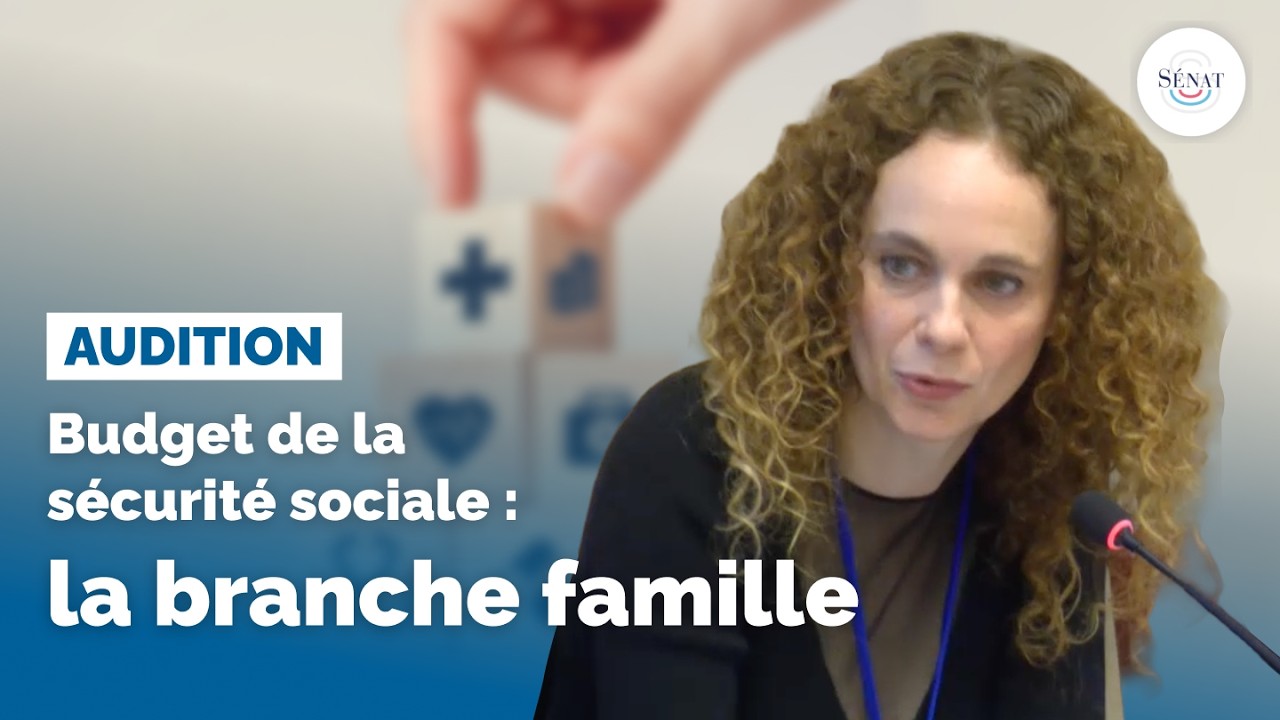
Budget de la Sécurité sociale : branche famille
Social Security Budget: Family Branch
Title history
- Budget de la Sécurité sociale : branche famille — observed on 20261030-1054 UTC (YouTube)
Keywords
Summary
200 words
Critical Evaluation
Value of the Information & Strength of the Argument
The value of the information is high as it provides direct, authoritative explanations from the head of the CNAF on the technical and practical implications of budget measures. The argumentation is solid: Bensussan supports her points with concrete data on under-execution, financing mechanisms, and operational constraints. She addresses each question thoroughly, often with nuance, acknowledging uncertainties and costs. However, the discussion is limited to the perspective of the CNAF and does not include broader critiques or independent analysis.
Scientific Rigor, Source Quality, Title Accuracy
The scientific rigor is good for a political hearing: the expert references specific budget figures and legal mechanisms, and she cites studies by CNAF and associations like Emmaüs on the use of the back-to-school allowance. However, no formal external sources are cited, and the hearing is purely oral. The title precisely matches the content, which is an audition on the family branch of the social security budget. The technical level is high, involving legal and financial details.
170 words
Title / Content Match
Title accurately reflects the content: a hearing on the family branch of the social security budget.
Quality & Reliability
8/10
Official senatorial hearing with high-level expert, precise on budget figures, but limited to one perspective and no independent verification.
Key Moments
Markers derived by PSI from the transcript: the creator did not define chapters.
- Opening remarks by the commission president and introduction of the director general.
- First question from Senator Olivier Henno on the FNAS slowdown and the legality of the regulatory freeze.
- Discussion on the back-to-school allowance: possible reorientation, age-based modulation, and prepaid card options.
- Examination of article 37 on residency condition for foreigners and the IT system challenges.
Cited Sources
- Audition video (YouTube) — Primary source of the hearing.
Contribution & Novelties
This hearing provides unique insights into the operational perspective of the CNAF on proposed budget measures, particularly the technical feasibility and implementation constraints. It clarifies that the FNAS adjustment is a correction for under-consumption, and highlights the legal debate over using regulatory measures for benefit freezes. The discussion on the back-to-school allowance reveals potential policy options and their costs.
Pour aller plus loin :
- Allocation de rentrée scolaire (Wikipedia) — Background on the French back-to-school allowance.
- Caisse nationale des allocations familiales (Wikipedia) — Overview of the CNAF and its functions.
- Projet de loi de financement de la sécurité sociale — Explanation of the French Social Security budget process.
108 words
Radar Profile
The radar profile shows strong scores in quality and technical level, with slightly lower quantity. This indicates a focused, expert-led discussion with limited breadth but high depth. The reliability is also high due to the official nature of the hearing.