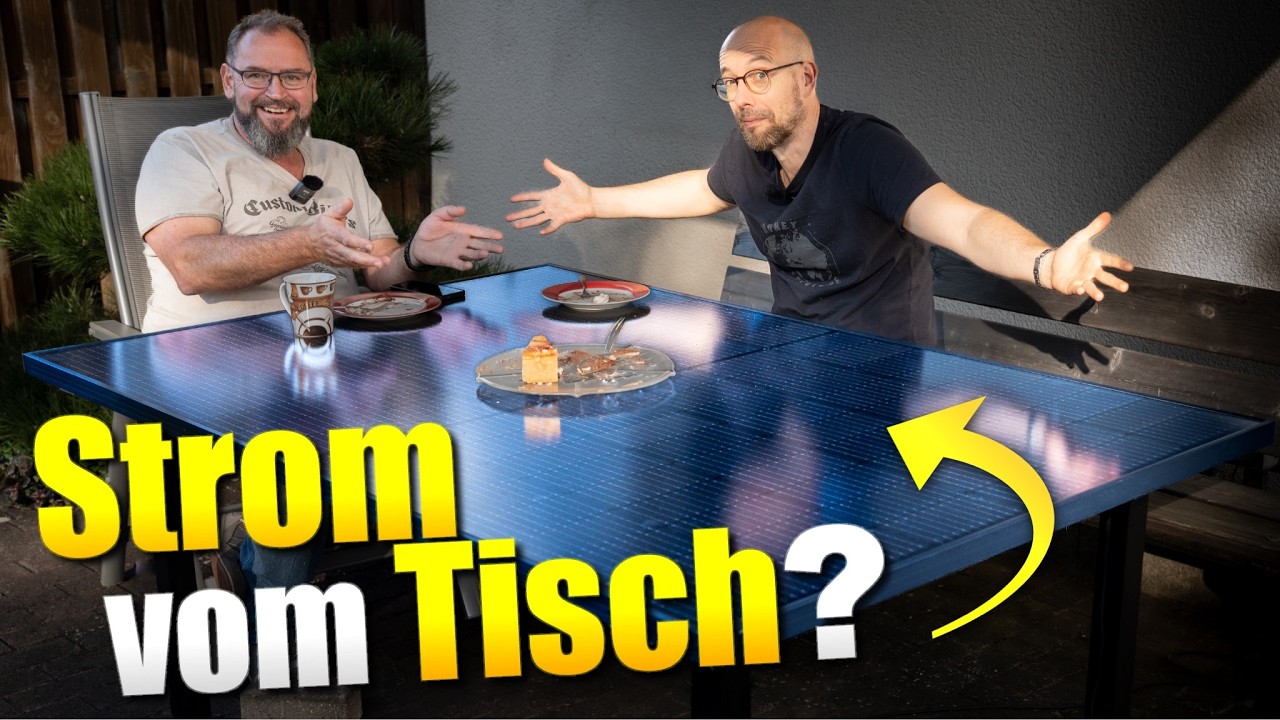
Solartisch: So viel Strom aus einem Tisch??
Solar Table: How Much Power Can You Really Get From a Table??
Title history
- Solartisch: So viel Strom aus einem Tisch?? — observed on 20261024-0817 UTC (YouTube)
Keywords
Summary
262 words
Critical Evaluation
Value of the Information & Strength of the Argument
The video provides concrete, verifiable data from a real installation, supported by live app measurements and a clear breakdown of costs and yields. It argues convincingly that a solar table can be a viable entry point into self-generated electricity, especially for those without rooftop access, by comparing the table’s output to typical household consumption and showing a reasonable payback period. The argument is balanced, acknowledging the table’s suboptimal orientation and the fact that it doesn’t make economic sense for someone who already has a large PV system, while emphasizing its practical and emotional value for enthusiasts. The reasoning is logically structured, moving from construction to legal issues, safety, and profitability, making a fair case for the product.
Scientific Rigor, Source Quality, Title Accuracy
The video is scientifically rigorous in its use of empirical data (2.5 years of yield logging) and adherence to current German regulations (Solar Package 2024). It clearly distinguishes between the creator’s experience and general recommendations, and it does not overstate claims—the payback period is estimated with appropriate caveats. The sources cited in the description include useful tools and a podcast, but no peer-reviewed or official regulatory documents are directly referenced; nevertheless, the information on registration aligns with official guidelines. The title accurately reflects the content, which is a hands-on assessment of the solar table’s electricity generation. The sponsor segment is present but does not compromise the integrity of the information presented.
243 words
Title / Content Match
The title correctly promises to quantify the generation of a solar table, and the video delivers with specific annual kWh figures and real-time power measurements.
Quality & Reliability
8/10
Real-world performance data over 2.5 years, clear explanation of construction, costs, legal requirements, and safety considerations. The video is transparent about limitations (non-optimal orientation) and provides a fair cost-benefit analysis.
Chapters
Cited Sources
- PV installation request form — Referenced in the video description for viewers seeking professional PV installation.
- Free solar system design tool — Mentioned as a free tool for designing solar systems, relevant to those planning similar projects.
- Podcast 'Alles wird Strom' — A podcast on the energy transition, mentioned in the description for further discussion.
Concurring Sources
- Market Master Data Register (MaStR) — The registration requirement mentioned is consistent with official German regulations for plug-in solar devices.
External References
Contribution & Novelties
The video contributes a detailed, real-world case study of a solar table, filling a gap in practical documentation for this niche application. It provides specific yield data, cost breakdowns, and regulatory compliance steps, which are valuable for DIY enthusiasts and those considering similar installations. The innovative aspect is repurposing an old table into a functional solar generator, demonstrating accessibility of solar technology beyond traditional roof installations.
Pour aller plus loin :
- Solar microinverter — Explains the technology used in the table, essential for understanding its operation.
- Photovoltaic system — General background on PV systems, useful for context.
- Net metering — Relevant to the economic analysis of self-consumption versus export.
109 words
Radar Profile
The radar profile shows a balanced performance with strong scores in information quantity and reliability, moderate technical depth, and a solid overall quality. The video excels in providing factual data and practical advice, making it a useful resource for the general public interested in small-scale solar devices.