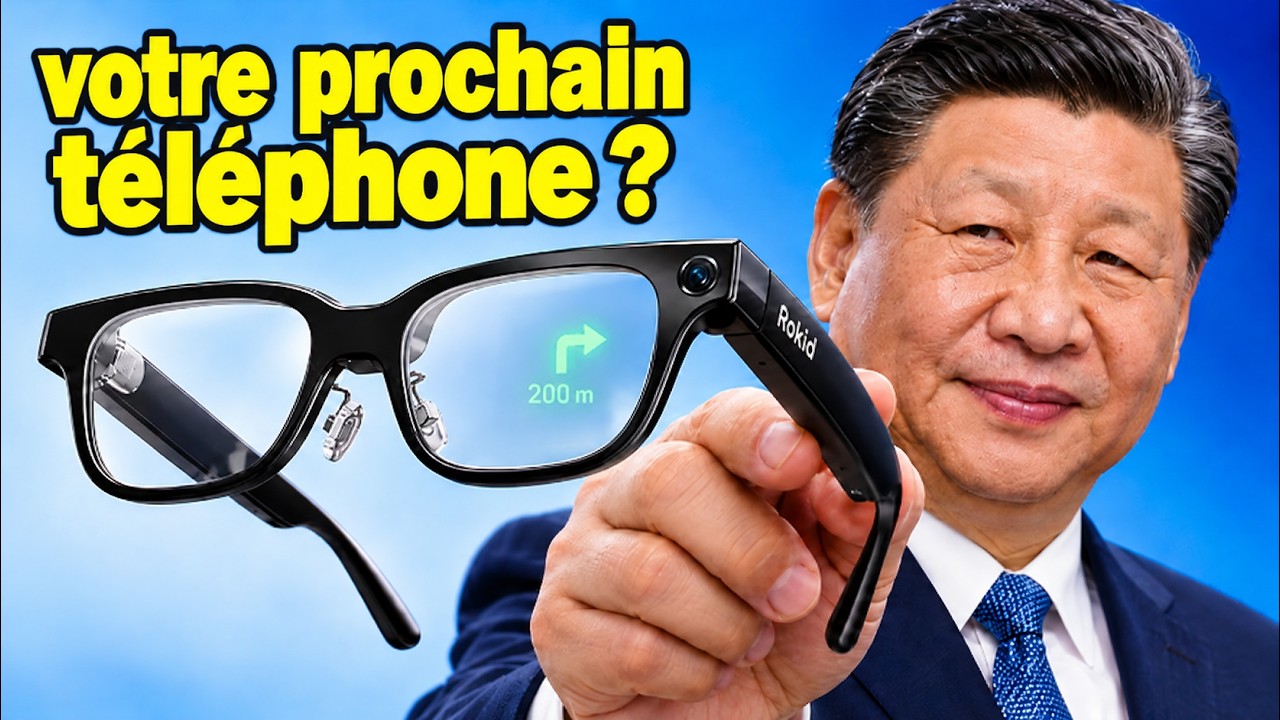
La Chine fabrique l'appareil qui pourrait remplacer le téléphone
China is building the device that could replace the phone
Title history
- La Chine fabrique l'appareil qui pourrait remplacer le téléphone — observed on 20261102-1422 UTC (YouTube)
Keywords
Summary
171 words
Critical Evaluation
Value of the Information & Strength of the Argument
The video offers valuable insights by synthesizing data from industry reports (Counterpoint, IDC), news outlets (SCMP, Bloomberg), and user reviews (Pocket-lint, MobileSyrup). It presents a balanced argument, acknowledging the strengths of Chinese products (price, integration, availability) while noting limitations (battery, software bugs, international restrictions). The argumentation is structured, moving from market trends to technical details and practical usage, and it does not shy away from critical evaluation, such as exposing the gap between marketing claims and real-world performance.
Scientific Rigor, Source Quality, Title Accuracy
The video cites multiple sources, including market research firms, academic studies, and reputable news media, which adds credibility. However, it also promotes an ebook via a link in the description, introducing a commercial bias. The title accurately matches the content, as the video thoroughly investigates the potential of smart glasses to replace phones. No comments were provided for analysis.
152 words
Title / Content Match
The title accurately reflects the content: the video investigates whether smart glasses, particularly from China, could replace phones.
Quality & Reliability
7/10
The video provides a comprehensive analysis based on multiple industry reports, test reviews, and news sources, but includes promotional content for an ebook and some unverified claims.
Key Moments
Markers derived by PSI from the transcript: the creator did not define chapters.
- Introduction of Rockid founder's speech and market leadership data.
- Overview of the smart glasses market and why screen matters.
- Chinese products from Xiaomi, Huawei, and Alibaba and their features.
- Technical details: microLED displays, battery life, and reliance on smartphone connectivity.
- Comparison with Meta's Ray Display and Apple's Vision Pro, including pricing and availability.
- Conclusion on current limitations and potential future of smart glasses.
Cited Sources
- Falling Behind eBook — Promotional link in video description, related to the analysis of China's tech advancements.
- Counterpoint Research — Cited for market share data on smart glasses, e.g., Rockid's 41% share.
- IDC — Cited for global smart glasses shipments and forecasts.
- South China Morning Post — Cited for viral story about Rockid's founder and the company's success.
- Bloomberg — Cited for Marc Gurman's report on Apple pausing a thinner headset for smart glasses.
- Human Factors and Ergonomics in Manufacturing — Cited for a study on weight tolerance in glasses.
- 404 Media — Cited for demonstration of facial recognition using privacy glasses.
Concurring Sources
- Counterpoint Research — Confirms data on smart glasses market shares.
- IDC — Confirms global shipment statistics.
Contribution & Novelties
This video provides a unique comparative analysis of smart glasses from multiple global players, emphasizing the Chinese ecosystem’s advantages and limitations. It goes beyond typical spec comparisons by incorporating real-world test results, privacy concerns, and market availability. The original contribution lies in assembling scattered information into a coherent narrative about the feasibility of replacing smartphones.
Pour aller plus loin :
- Smart glasses — Overview of the technology and history.
- MicroLED — The display technology used in many of these devices.
- Augmented reality — The broader context for these wearables.
- Lithium-air battery — A future battery technology mentioned in the video’s outro.
101 words
Radar Profile
The radar profile shows balanced scores across information quantity, quality, and technical depth, with slightly lower reliability due to potential commercial bias. This indicates a well-researched but somewhat marketing-tainted analysis.