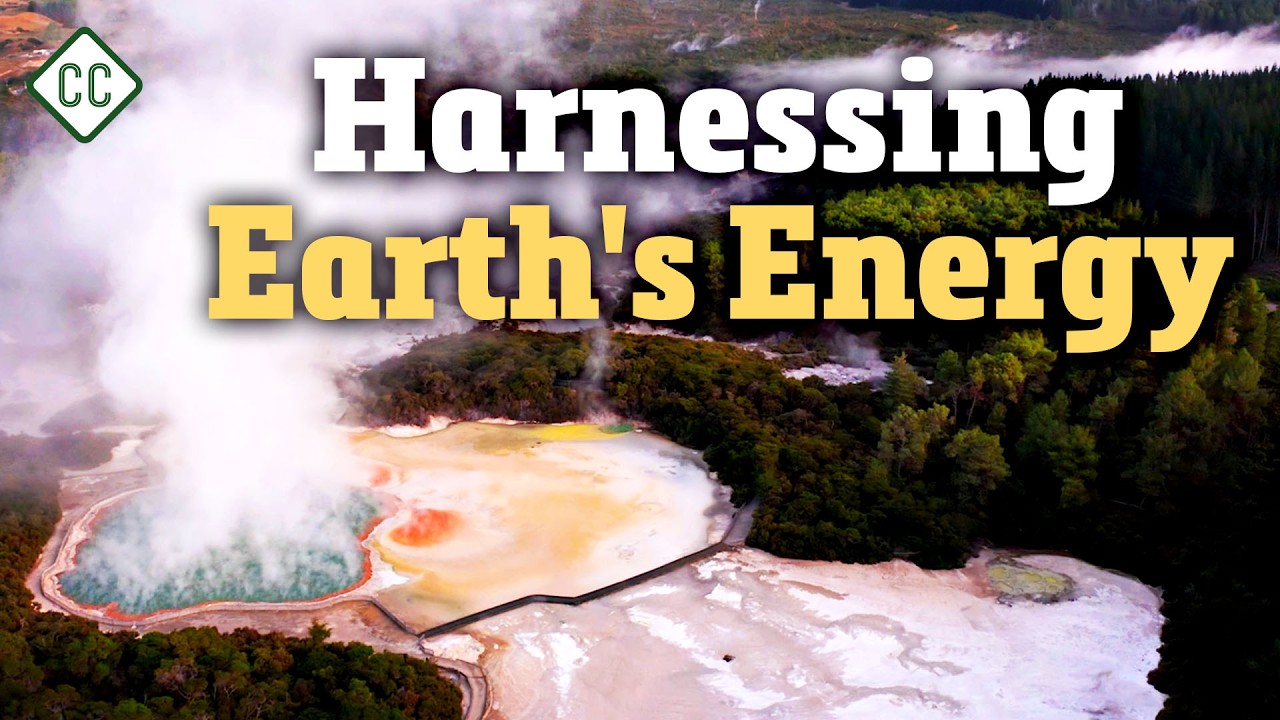
What is Geothermal Energy?: Crash Course Geology #21
Keywords
Summary
183 words
Critical Evaluation
Value of the Information & Strength of the Argument
The video provides a solid educational foundation on geothermal energy and fossil fuels, presenting information in an engaging and accessible manner. The argumentation is logically structured: it first establishes the context of fossil fuels, then introduces geothermal as a solution, and finally discusses challenges. The inclusion of concrete examples (Iceland, Tuscany, Oregon) strengthens the value by making abstract concepts tangible. The claim about 0.1% of Earth’s heat meeting needs for 2 million years is striking but presented without citation, so while it adds interest, it lacks rigorous sourcing. Overall, the value lies in its comprehensive overview and clear explanations, though it does not delve into technical depths or provide original research.
Scientific Rigor, Source Quality, Title Accuracy
The rigor is typical of CrashCourse’s high standards: the video is scripted, fact-checked, and linked to external sources via a Google Doc. The title accurately reflects the content, which covers both fossil fuels and geothermal energy, the latter being the main focus. The video’s clear structure and use of visual aids support its educational purpose. The description provides a direct link to a sources document, enhancing transparency. Adequation between title and content is strong, with the mention of ‘Crash Course Geology’ properly signaling the subject matter. No misleading information was detected, and the explanations align with mainstream geological understanding.
225 words
Title / Content Match
The title accurately reflects the video's focus on geothermal energy while also clarifying the geological context, including a substantial discussion of fossil fuels. The content matches the title's promise.
Quality & Reliability
8/10
CrashCourse is a well-established educational channel with a strong reputation for accuracy. The episode provides a clear, scientifically accurate overview of fossil fuel formation and geothermal energy, referencing geological processes and citing supporting sources in the description.
Chapters
Cited Sources
- Crash Course Geology #21 Sources — The description links to a Google Doc containing sources referenced in the episode.
External References
Contribution & Novelties
The video effectively synthesizes existing knowledge about fossil fuel formation and geothermal energy into an engaging educational segment. Its novelty lies in the clear visual explanations and relatable examples, making complex geological processes accessible to a broad audience. While it does not break new scientific ground, it fills a gap in public understanding of geothermal energy’s potential.
Pour aller plus loin :
- Geothermal energy — Overview of geothermal energy, its types, and global usage.
- Carboniferous — Geological period during which most coal formed, relevant to the video’s discussion.
- Fracking — Hydraulic fracturing technique mentioned as a problematic extraction method.
99 words
Radar Profile
The radar profile shows balanced scores across information quantity, quality, and reliability, with a slightly lower technical level reflecting the video's introductory approach. This suggests a reliable educational resource that prioritizes clarity over in-depth technical detail.