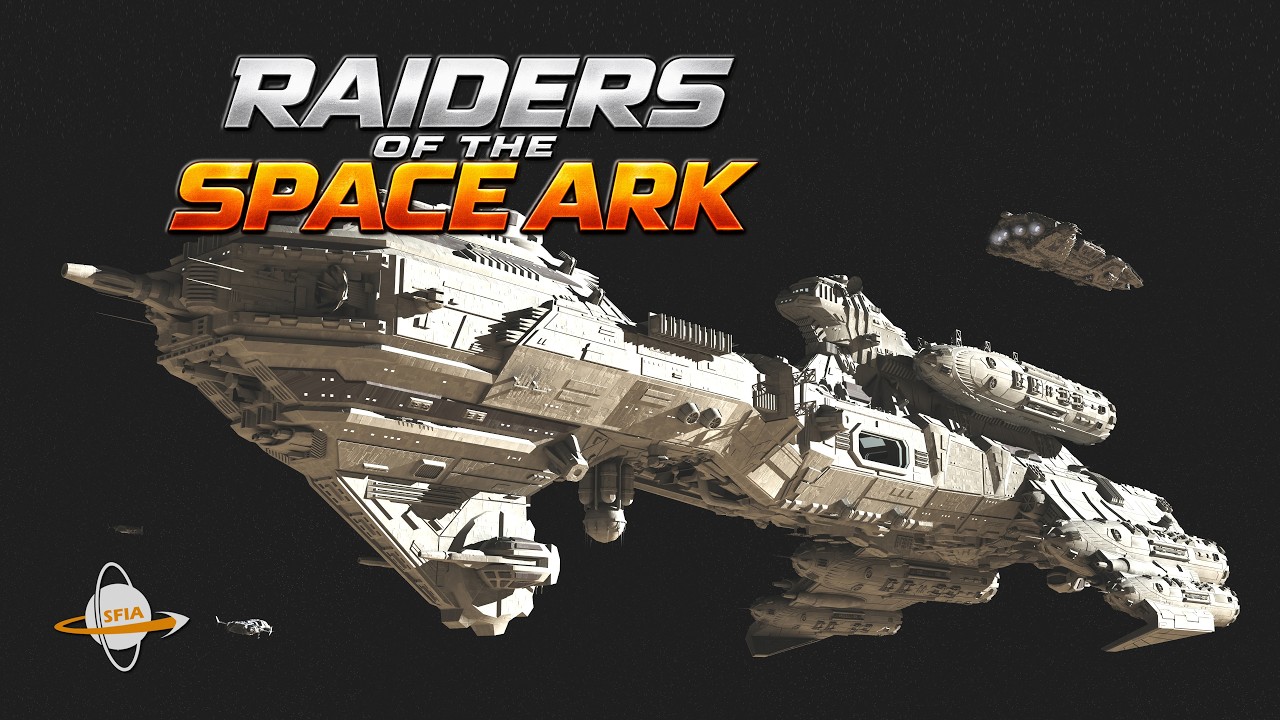
Stealing the Ark: Could Pirates Hijack a Colony Ship?
Title history
- Stealing the Ark: Could Pirates Hijack a Colony Ship? — observed on 20261105-1522 UTC (YouTube)
Keywords
Summary
134 words
Critical Evaluation
Value of the Information & Strength of the Argument
The video delivers high-value information by systematically exploring the logistics and physics of spacecraft hijacking. It grounds its speculation in realistic engineering constraints, such as delta-v, heat signatures, and communication delays, making the argumentation logically solid. The reasoning is comprehensive, covering multiple attack vectors and countermeasures, and avoids oversimplification by acknowledging the complexity of interstellar operations.
Scientific Rigor, Source Quality, Title Accuracy
The scientific rigor is strong; the video correctly applies orbital mechanics and thermodynamics to speculative scenarios. It does not cite specific academic papers but relies on well-established physics knowledge. The title is apt and directly aligned with the content. As no comments were provided, no audience tendencies are analyzed.
120 words
Title / Content Match
The title accurately reflects the content, which explores the feasibility and scenarios of hijacking a colony ship.
Quality & Reliability
8/10
The video provides a rigorous speculative analysis grounded in physics and engineering principles, with appropriate caveats about uncertainties. The argumentation is coherent and well-structured, though it remains inherently speculative.
Chapters
Cited Sources
- Nebula.tv — Music composer credits from the video description.
- Isaac Arthur Website — Channel's official website.
- Nebula Subscription Link — Affiliate link for Nebula subscription.
- Unsealed on Nebula — Promoted related content from the description.
- IsaacArthur Subreddit — Community discussion forum.
- SubscribeStar — Funding platform for the channel.
Contribution & Novelties
The video’s original contribution lies in integrating physics-based stealth constraints with a realistic threat model for interstellar piracy, specifically focusing on the value of a full arkship and the varying windows of vulnerability during its voyage. It offers a nuanced view of piracy as both a practical risk and a potential cultural myth.
Pour aller plus loin :
- Generation ship — Overview of the concept and its engineering challenges.
- Interstellar travel — Physics and proposed methods for traveling between stars, relevant to the ship’s speed and detection.
- Fermi paradox — Discusses why civilizations might hide or be silent, connecting to the secrecy aspects of the arkship.
106 words
Radar Profile
The radar profile shows high scores in information quantity and quality, with solid technical depth. The fiabilite is moderately high, reflecting the speculative nature of the subject.