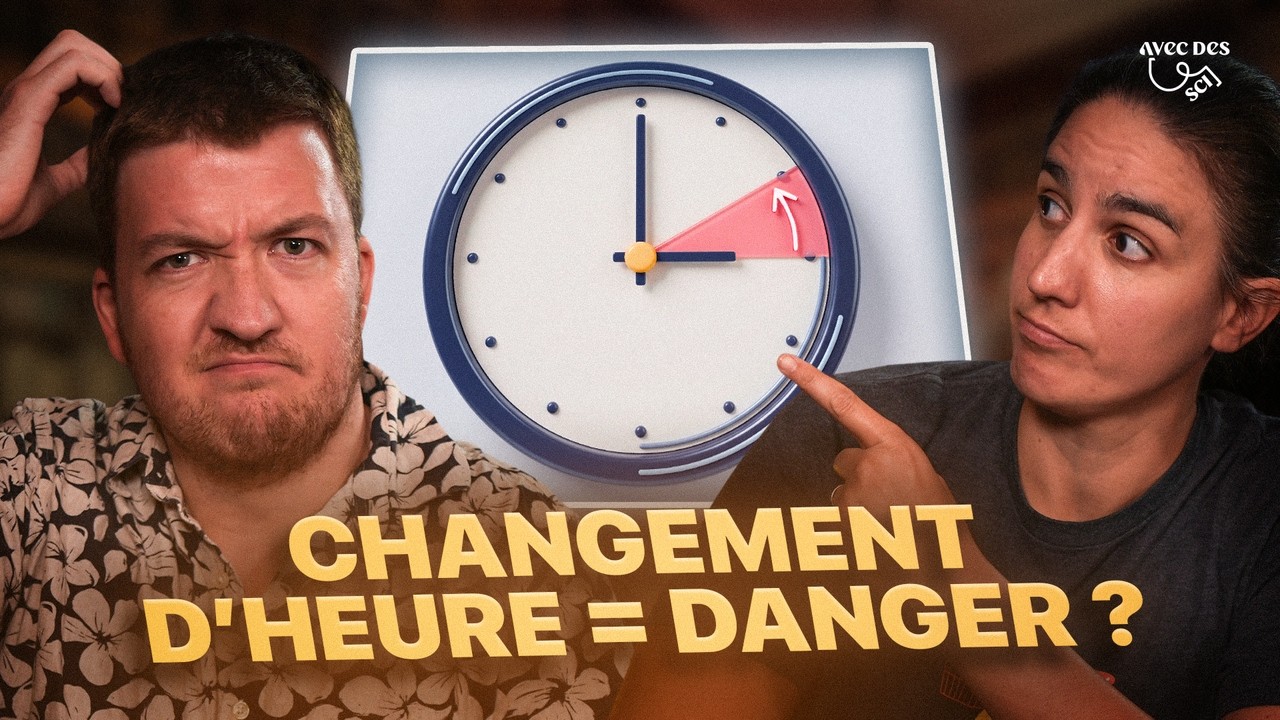
Ce que 157 études disent vraiment du changement d'heure
What 157 studies really say about the time change
Keywords
Summary
144 words
Critical Evaluation
Value of the Information & Strength of the Argument
The information provided is current and based on credible sources, including a systematic review published in a Springer journal, a PLOS ONE study on larvae, and a Nature article on Amazonian earthworks. The hosts present findings with appropriate caution, distinguishing solid evidence from hypotheses. They clearly explain the limitations of the studies, such as the difficulty of isolating the effect of the time change due to varying latitudes and individual lifestyles. The argumentation is balanced, neither dismissing potential harms nor exaggerating them, and they explicitly state when data are insufficient. The discussion of the measles outbreak uses concrete figures and emphasizes the importance of vaccination, framing it as a public health concern.
Scientific Rigor, Source Quality, Title Accuracy
The video demonstrates high scientific rigor by referencing original research articles and providing direct links in the description. For each segment, they mention the source publication and sometimes the journal, allowing viewers to verify claims. The synthesis of 157 studies is presented as a systematic review, and the hosts explicitly note that conclusions are limited by data quality. The title accurately reflects the lead story, though it omits the broader scope of the episode. Viewer comments are generally positive, with some constructive remarks about methodological details, but the overall reception indicates trust in the hosts’ expertise.
223 words
Title / Content Match
The title focuses on the main segment about the time change health effects, which occupies a significant portion, though the video also covers other news items. It remains reasonably representative.
Quality & Reliability
8/10
The video relies on recent peer-reviewed studies, systematic reviews, and official health data, with sources clearly cited in the description. The presentation is balanced and does not overstate conclusions, acknowledging gaps in evidence.
Chapters
Cited Sources
- Study on health effects of daylight saving time (Springer) — Systematic review of 157 studies on time change health impacts
- PLOS ONE study on flesh-eating superworms — Research on Zophobas morio larvae cleaning skeletons
- Science article on superworms — Companion article about the same larvae study
- Nature article on Amazonian earthworks — Lidar discovery of over 25,000 geoglyphs in the Amazon
- Scientific American article on earthworks — Popular summary of the Amazon earthworks discovery
- USA Today measles outbreak tracker — Graphic tracking measles cases in the US in 2026
External References
Contribution & Novelties
The video provides a concise and accessible synthesis of recent scientific findings, especially the systematic review on daylight saving time, which clarifies the current state of evidence. It also highlights novel research on biological specimen preparation using larvae, offering a sustainable alternative to chemical methods. The Lidar-based discovery of Amazonian earthworks challenges preconceptions about pre-Columbian populations, contributing to a broader understanding of Amazonian history.
Pour aller plus loin :
- LiDAR — Explanation of the remote sensing technology used in the Amazon study.
- Systematic review — Methodology applied to analyze the 157 studies on time change.
- Social jetlag — Related concept to circadian misalignment, discussed in the context of time changes.
110 words
Radar Profile
The radar profile shows high scores for information quality, reliability, and technical level, reflecting a well-researched and rigorous production. The quantity of information is also substantial due to the multiple news segments, making it a dense but informative episode.
💬 positif. Sur les 30 commentaires analysés, les spectateurs expriment un accueil très favorable, soulignant la qualité pédagogique et l'utilité de l'émission, avec quelques remarques techniques ou nuancées.