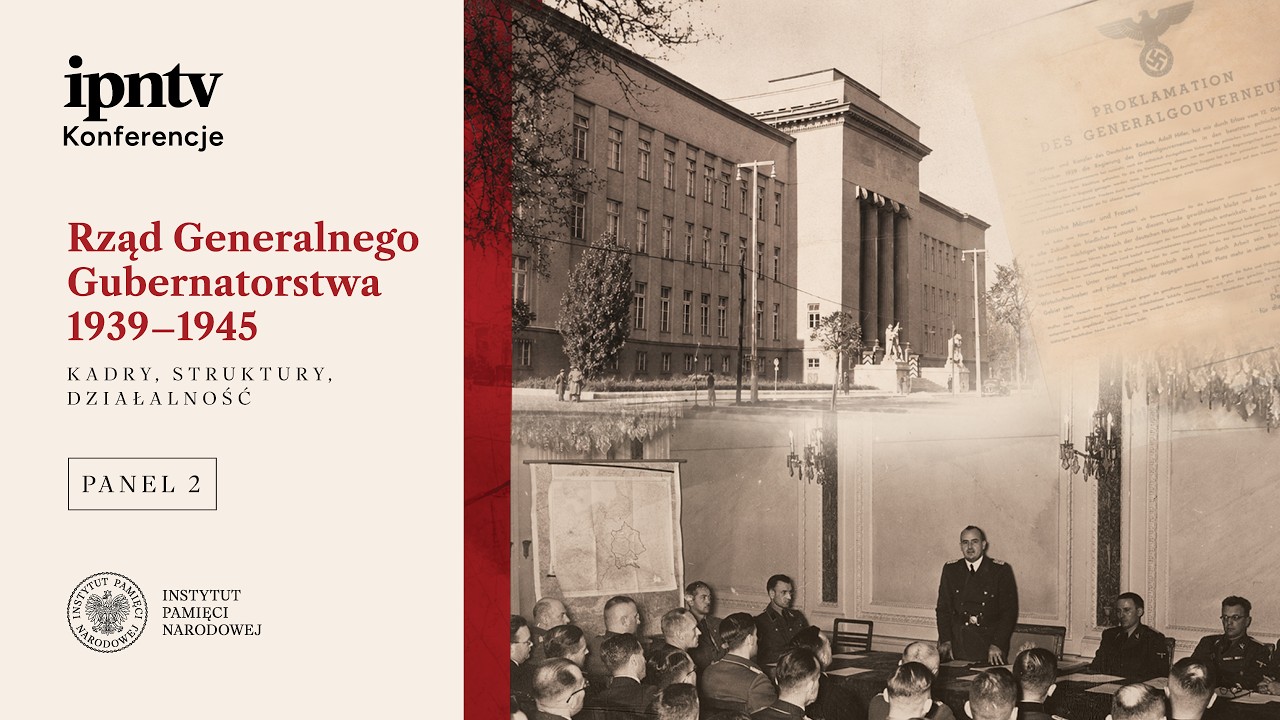
[PANEL II] Funkcjonowanie resortów „Rządu” GG – cz. I
[PANEL II] The Functioning of the General Government "Government" Departments – Part I
Title history
- [PANEL II] Funkcjonowanie resortów „Rządu” GG – cz. I — observed on 20261101-0404 UTC (YouTube)
Keywords
Summary
243 words
Critical Evaluation
Value of the Information & Strength of the Argument
The value of the information is exceptionally high for specialists in Second World War history, offering a micro-level view of the GG’s administrative machinery based on original archival documents. The argumentation is solid, each speaker presenting a structured narrative backed by references to specific regulations, organizational charts, and biographical details of key personnel. The credibility is reinforced by the affiliation of all three speakers with major Polish historical institutions (IPN, University of Silesia, Museum of WWII). The presentations are sharply focused, avoiding overgeneralization and providing nuanced conclusions, such as the discussion of the limits of propaganda effectiveness due to lack of reliable measurement methods.
Scientific Rigor, Source Quality, Title Accuracy
The scientific rigor is high; the presentations are based on archival research and clearly cite official documents like the ‘Verordnungsblatt’ (journal of regulations) and personal testimonies. The quality of sources is excellent, leveraging the IPN’s extensive archives. The title perfectly matches the content, which is a straightforward analysis of the internal functioning of three GG ministries. No comments were provided in the input, so public reaction cannot be assessed.
188 words
Title / Content Match
The title accurately reflects the content, which details the functioning of the Justice, Propaganda, and Forestry departments of the General Government. The 'Part I' indication is appropriate as it covers three specific departments.
Quality & Reliability
8/10
The video features three presentations by professional historians affiliated with the Institute of National Remembrance (IPN), a reputable state research institution. The content is based on archival research and primary sources, with high scholarly rigor, though the scope is narrow and specialized.
Key Moments
Markers derived by PSI from the transcript: the creator did not define chapters.
- Start of Dr. Konrad Graczyk's presentation on the Main Department of Justice.
- Discussion of Kurt Wille's directives and their impact on judicial practice.
- Start of Dr. Wojciech Grott's presentation on the Main Department of Propaganda.
- Analysis of propaganda media and the phases of German information policy.
- Start of Dr. Grzegorz Bębnik's presentation on the Main Department VI (Forestry).
- Discussion of the role of forestry in the war economy and the conclusions of the panel.
Cited Sources
- Full Conference Playlist (IPNtv Konferencje) — Official playlist link provided in the video description, linking to the broader conference series.
Contribution & Novelties
The video provides a highly detailed and academically grounded insight into the administrative functioning of three specific departments of the General Government, which is rarely covered in such depth in general histories. It brings forward specific biographical data (e.g., Kurt Wille, Wilhelm Ohlenbusch, Kurt Eissfeldt) and legal/administrative mechanics, complemented by critical interpretations of their roles in the occupied territory.
Pour aller plus loin :
- General Government — Provides essential historical context on the territory and administration discussed in the video.
- Hans Frank — The governor of the General Government, central figure to the entire administration structure.
- Propaganda in Nazi Germany — Relevant to the second presentation on the propaganda department and its methods.
- Kurt Wille (1894-1945) — Key figure in the justice department; no reliable public URL confirmed for a dedicated biography, so it is cited by name only.
139 words
Radar Profile
The radar profile shows high scores in quality of information and reliability, with a slightly lower score in technical level due to the specialized but accessible nature. The quantity of information is substantial given the three detailed presentations. This indicates a highly trustworthy and dense scholarly source, best suited for an audience with an existing interest in WWII occupation history.