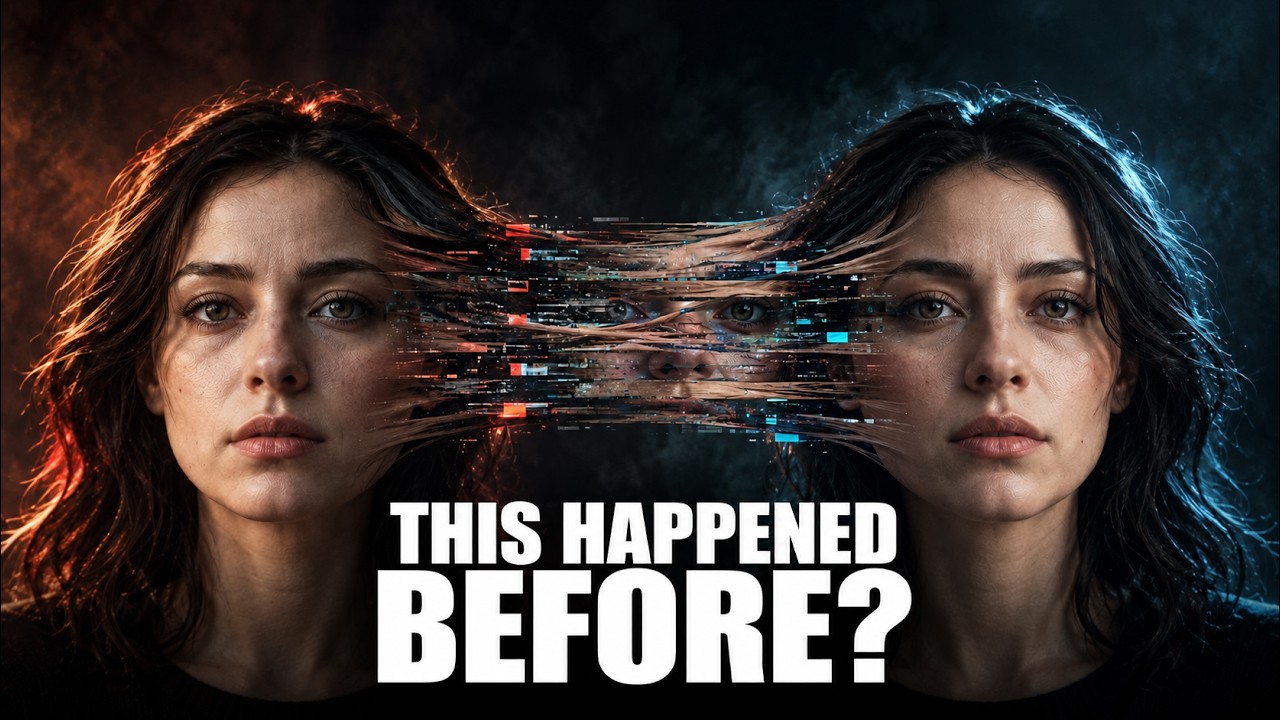
Why do we get déjà vu? Your brain is lying to you.
Title history
- Why do we get déjà vu? Your brain is lying to you. — observed on 20261025-1513 UTC (YouTube)
Keywords
Summary
146 words
Critical Evaluation
Value of the Information & Strength of the Argument
The documentary excels at weaving a compelling narrative around scientific evidence. It presents multiple lines of investigation — historical case studies, electrical stimulation of the temporal lobe, and controlled lab experiments — to build a coherent explanation of déjà vu as a failure of familiarity detection. The argumentation is logical and well-structured, moving from individual cases to general mechanisms. It clearly differentiates between the feeling of knowing and actual recollection, supported by neuroscientific findings. The film also addresses rare chronic cases, reinforcing the idea that this is a genuine neurological phenomenon rather than mere superstition. The presentation is persuasive and grounded in verifiable research, though it lacks direct citations to specific papers.
Scientific Rigor, Source Quality, Title Accuracy
The documentary demonstrates strong scientific rigor by referencing actual researchers (e.g., John Hughlings Jackson, Wilder Penfield, Chris Moulin, Anne Cleary) and published studies. It carefully distinguishes between established findings and speculative interpretations. However, the absence of explicit source links in the description limits the viewer’s ability to verify claims independently. The title accurately reflects the content, promising an explanation of why déjà vu occurs and framing it as a ‘brain lie.’ The film adheres to its promise, delivering a thorough and engaging exploration of the phenomenon without oversimplifying.
215 words
Title / Content Match
The title aptly captures the film's core message: déjà vu results from the brain producing a false sense of familiarity, effectively 'lying' about the past.
Quality & Reliability
7/10
The documentary synthesizes established scientific findings on déjà vu, referencing historical case studies, brain stimulation research, and contemporary lab experiments. It presents information accurately and accessibly, though without direct source links in the description.
Chapters
Contribution & Novelties
This documentary contributes to public understanding by synthesizing a wide range of déjà vu research into a single cinematic narrative, making the science accessible to a general audience. It highlights the distinction between familiarity and recollection, and illustrates how brain lesions and stimulation can produce the feeling, thereby demystifying the phenomenon. The ‘glitch in the matrix’ framing is addressed and refuted with evidence, helping viewers recognize it as a natural brain error rather than a paranormal event.
Pour aller plus loin :
- Déjà vu — Wikipedia overview of the phenomenon, its history, and proposed explanations.
- Temporal lobe — The brain region implicated in déjà vu and memory processing.
- Entorhinal cortex — A specific area whose stimulation has been linked to déjà vu in research.
- Jamais vu — The opposite phenomenon where familiar situations feel unfamiliar, referenced in the film.
139 words
Radar Profile
The radar profile shows strong scores in information quantity and global reliability, with moderate technical depth. This reflects a documentary that is comprehensive and trustworthy, but not overly technical, making it suitable for a broad audience interested in understanding déjà vu from a scientific perspective.