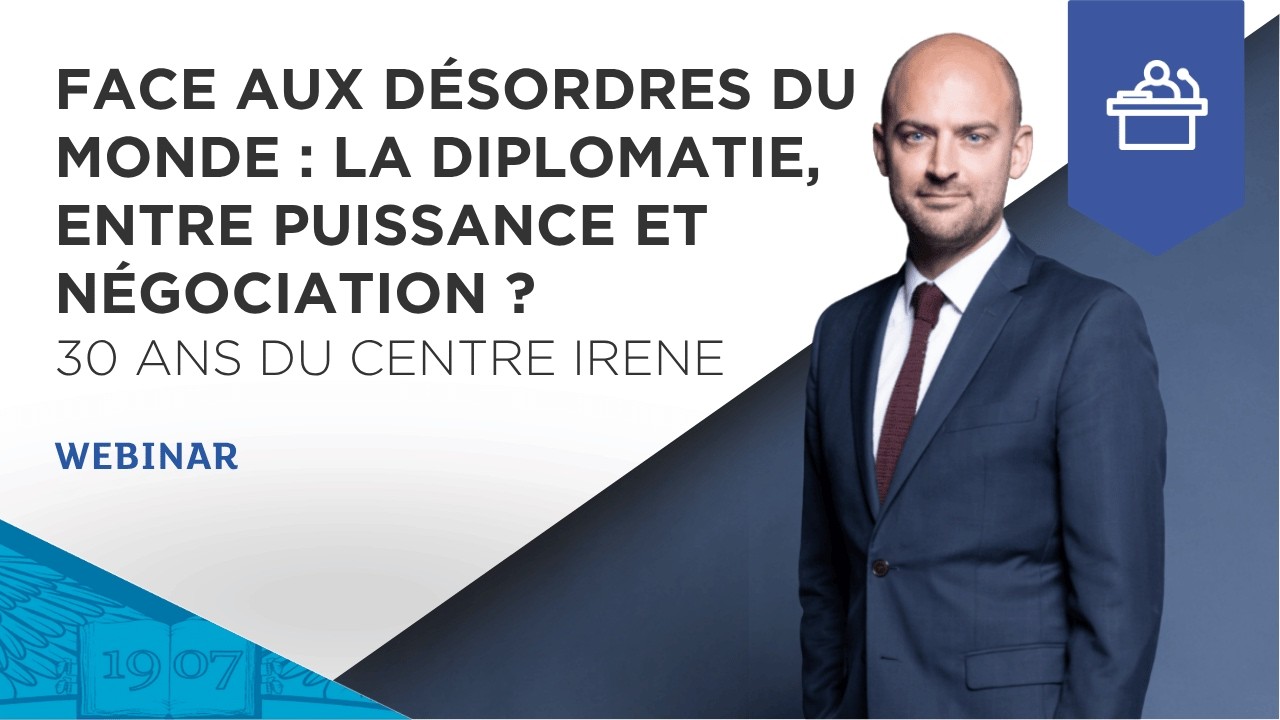
Face aux désordres du monde : la diplomatie, entre puissance et négociation ? | ESSEC WEBINAR
Facing the world's disorders: diplomacy, between power and negotiation? | ESSEC WEBINAR
Title history
- Face aux désordres du monde : la diplomatie, entre puissance et négociation ? | ESSEC WEBINAR — observed on 20261104-1139 UTC (YouTube)
Keywords
Summary
131 words
Critical Evaluation
Value of the Information & Strength of the Argument
The value of the information lies in the direct input from a sitting foreign minister, offering authoritative perspectives on current diplomatic issues. The argumentation relies heavily on experiential knowledge and expert interpretation rather than empirical data. The panelists provide balanced viewpoints on the interplay between hard power and negotiation, though the discussion remains high-level and lacks deep analytical depth. The novelty is limited to reaffirming known positions and offering anecdotal insights rather than presenting new research or frameworks.
Scientific Rigor, Source Quality, Title Accuracy
The scientific rigor is moderate: the webinar is an opinion-based debate, not a peer-reviewed scientific contribution. Sources are not cited; the content draws on the panelists’ expertise and official positions. The title accurately matches the content, as the question of power versus negotiation is consistently addressed. The production is professional, but the low viewership (8 views) suggests limited reach. No comments were provided for analysis.
158 words
Title / Content Match
The title accurately reflects the central question of the webinar; the discussion indeed addresses the balance between power and negotiation in diplomacy.
Quality & Reliability
7/10
High-level expert panel with a sitting minister, but limited transcript available and low production values; content is expert opinion rather than peer-reviewed research.
Key Moments
Markers derived by PSI from the transcript: the creator did not define chapters.
- Introduction by Prof. Aurélien Colson, setting the theme.
- Jean-Noël Barrot gives an overview of current international affairs.
- Joseph Maïla discusses the situation in the Middle East and the Gulf.
- Viviane de Beaufort explains how law can help European sovereignty.
- Philippe Le Corre and Aurélien Colson examine China's role on the international stage.
- Paul Bogillot raises climate and COPs issues.
- Jean-Baptiste Varnat discusses the attractiveness of the French foreign service as an employer.
- Aurélien Colson leads discussion on Russia's war in Ukraine and the Trump pivot.
Cited Sources
- ESSEC Knowledge — General research platform of ESSEC, referenced for further academic resources.
- ESSEC Business School Official Website — Institutional site providing program and center information.
- ESSEC LinkedIn — Professional network page, mentioned for community engagement.
- ESSEC YouTube Channel — Channel hosting this webinar and other content.
Contribution & Novelties
The webinar offers a rare opportunity to hear a sitting foreign minister articulate the French perspective on key global challenges in an academic setting. Its contribution lies in the juxtaposition of practitioner and academic viewpoints on how diplomacy balances power and negotiation. However, the insights are generally consistent with established diplomatic discourse, offering little new empirical evidence or theoretical advancement.
Pour aller plus loin :
- Diplomacy — Provides a comprehensive overview of diplomatic practice and theory.
- Negotiation — Explores negotiation tactics and strategies, central to the webinar’s theme.
- Soft power — Discusses how non-coercive influence shapes international relations, relevant to the power-negotiation nexus.
103 words
Radar Profile
The radar profile shows moderate scores across all dimensions, with quality and reliability slightly higher than quantity and technicality, indicating a reliable but not highly technical discussion with moderate information density.