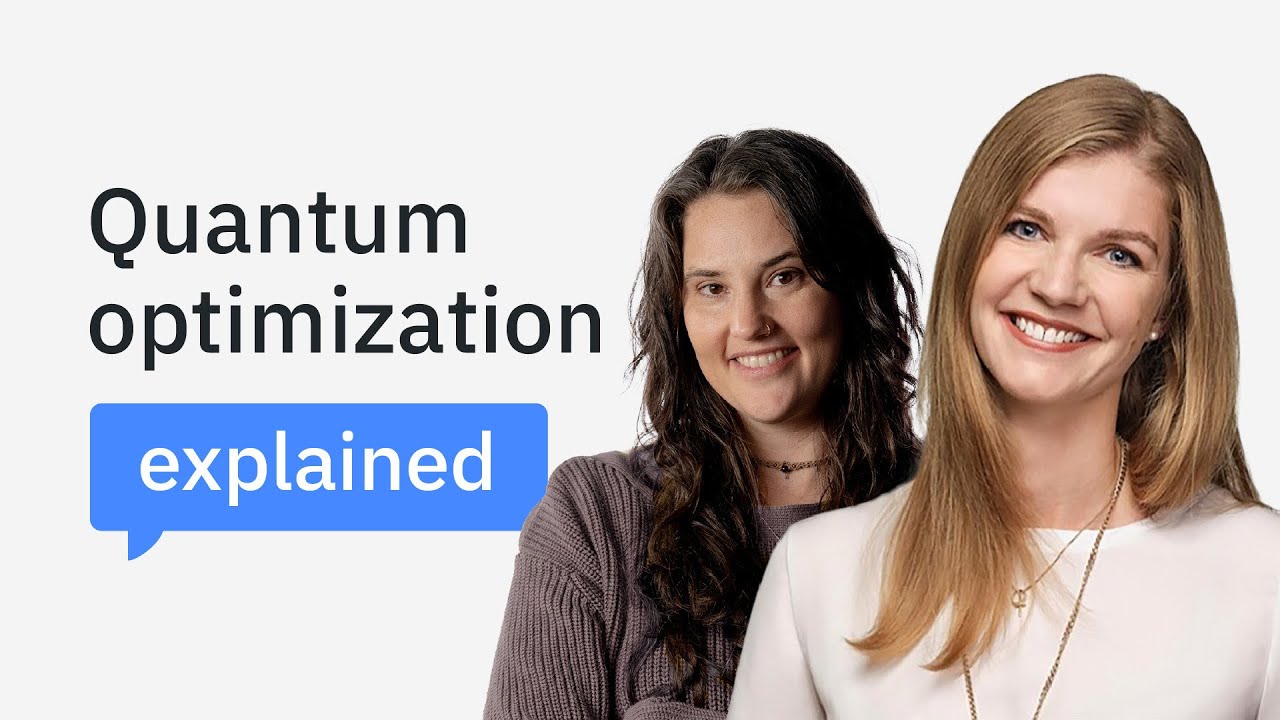
Benchmarking Quantum Optimization: A Conversation with Dr. Christa Zoufal
Keywords
Summary
188 words
Critical Evaluation
Value of the Information & Strength of the Argument
The interview provides genuine value by explaining the rationale behind QOBLIB and the current state of quantum optimization research. The argumentation is solid: Dr. Zoufal clearly distinguishes between classical and quantum methods, uses concrete examples (e.g., 10^30 combinations for 100 wardrobe items), and systematically explains the selection criteria for problem classes. The emphasis on fair benchmarking and complementary role of quantum computers is scientifically sound. The three metric categories (solution quality, computational resources, runtime) represent a thoughtful framework for comparing algorithms. The discussion is grounded in real implementations and ongoing community contributions, lending credibility to the claims.
Scientific Rigor, Source Quality, Title Accuracy
The video is rigorous in its scientific approach: Dr. Zoufal references a peer-reviewed paper (Nature Computational Science) and an official QOBLIB website, both linked in the description. The claims about problem hardness and quantum advantages are carefully qualified, avoiding overstatements. The title accurately reflects the content—it is indeed a conversation about benchmarking quantum optimization. The description also includes relevant keywords and background context. No advertising or promotional content is present, aside from the implicit mention of IBM’s own hardware (e.g., the Night Hawk chip series), which is presented factually within the research context.
205 words
Title / Content Match
The title accurately reflects the content: a focused interview on benchmarking quantum optimization with Dr. Zoufal.
Quality & Reliability
9/10
The interview features Dr. Christa Zoufal, an IBM Quantum researcher, discussing the QOBLIB benchmarking library. The content is anchored by a peer-reviewed publication in Nature Computational Science and an open-source project website. The discussion is sober, technical, and balanced, with no overclaims. The sources are authoritative and directly referenced in the video description.
Key Moments
Markers derived by PSI from the transcript: the creator did not define chapters.
- Introduction to optimization problems and their real-world applications
- Why optimization problems are hard: exponential growth of solution space
- How quantum computers could help by performing smarter searches
- Criteria for evaluating whether a problem suits quantum methods
- Introduction to QOBLIB: purpose, ten problem classes, and three metric categories
- Selection of problems: real-world relevance and diversity, specific examples (Birkhoff, etc.)
- Public leaderboard: 48 submissions from 24 organizations; success stories and community feedback
- Future outlook: hardware and algorithm improvements, QOBLIB as a unifying framework
Cited Sources
- QOBLIB paper (Nature Computational Science) — Describes the QOBLIB library, its design, and the metrics considered
- QOBLIB website — Official open-source library repository and documentation
Contribution & Novelties
The video introduces QOBLIB as an open-source, standardized benchmarking library specifically designed for quantum optimization. Its novelty lies in offering ten problem classes that are practically relevant and hard for classical solvers, with graded problem sizes and a public leaderboard for community contributions. This addresses a gap where prior quantum benchmarks were either hardware-focused or used problems solvable classically (e.g., traveling salesman). QOBLIB enables fair, model-agnostic comparisons and tracks algorithm and hardware progress over time.
Pour aller plus loin :
- Quantum approximate optimization algorithm (QAOA) — Central quantum algorithm for combinatorial optimization; relevant to the methods discussed.
- Combinatorial optimization — The overarching problem class QOBLIB targets.
- IBM Quantum — The hardware and software ecosystem behind the research, including Qiskit.
- Quantum computing — General background for the principles mentioned.
128 words
Radar Profile
The radar profile is well-balanced, with high scores in information quality and reliability, and moderate scores in quantity and technical level. This reflects an expert interview that is informative and credible but not excessively technical, suitable for a broad audience interested in the current state of quantum optimization.