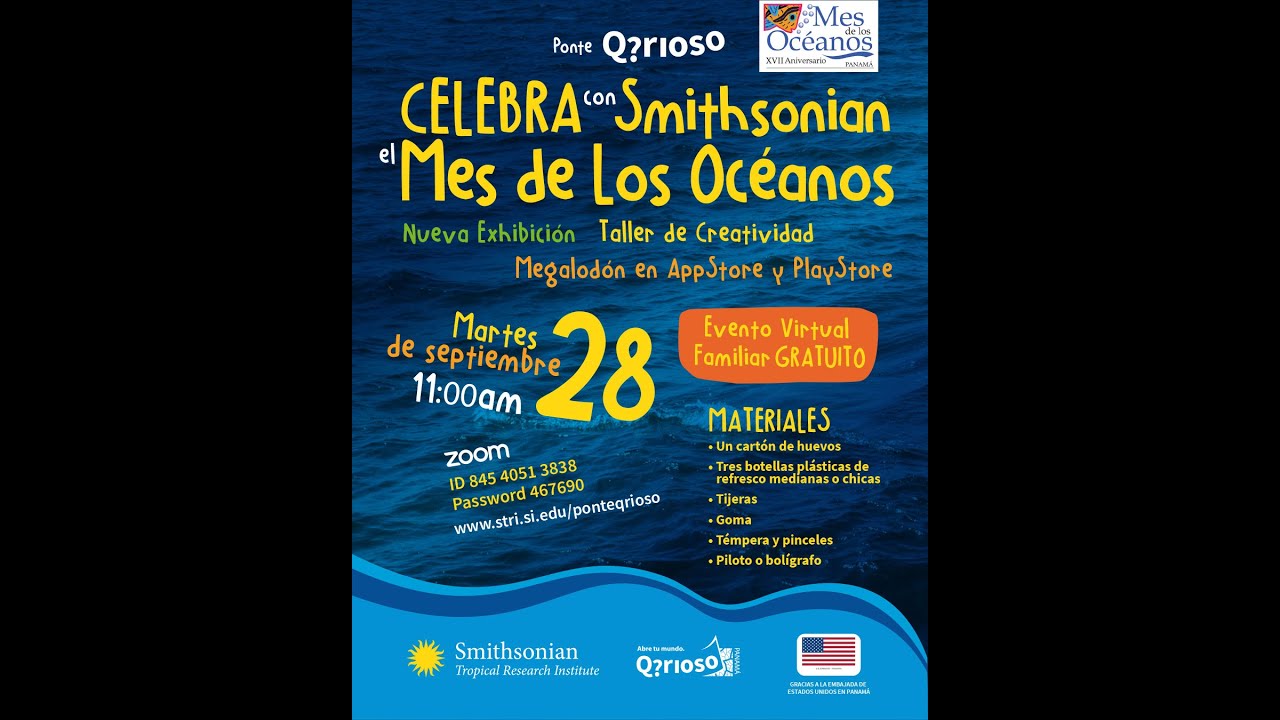
Celebra con Smithsonian el Mes de los Océanos
Title history
- Celebra con Smithsonian el Mes de los Océanos — observed on 20261030-1713 UTC (YouTube)
Keywords
Summary
166 words
Critical Evaluation
Value of the Information & Strength of the Argument
The video provides solid educational value by breaking down complex biological concepts into accessible language for a general audience, using analogies and interactive questioning. The explanation of coral as animals, the symbiotic relationship with zooxanthellae, and the distinction between hard and soft corals are scientifically accurate. The argumentation is clear and logical, progressing from basic definitions to ecological importance and then to threats. Real-world examples and simple illustrations (like comparing acidification to vinegar) make the content relatable. However, the video does not delve into nuanced scientific debate, focusing instead on established facts and general recommendations for conservation. The interactive format encourages engagement, but the depth of information is limited, leaving the viewer with a foundational understanding rather than advanced knowledge.
Scientific Rigor, Source Quality, Title Accuracy
The scientific rigor is acceptable: the content is presented by a research institute, and the factual claims are consistent with mainstream marine biology. The sources are not explicitly cited within the video itself, but the institute’s credibility adds reliability. The title accurately represents the content—it is a celebration of ocean month with educational materials. No external references are provided in the description, so the viewer is not directed to further literature. The video’s strength lies in its clear pedagogy and the expertise of the presenter, though it would benefit from including citations or links to scientific studies for those wishing to explore deeper. The adéquation between title and content is strong, as the video indeed celebrates oceans through educational outreach.
255 words
Title / Content Match
The title accurately reflects the content — a celebration of ocean month with educational content about coral reefs.
Quality & Reliability
7/10
The content is presented by a research institution, scientifically accurate but simplified for a general audience, with interactive elements.
Key Moments
Markers derived by PSI from the transcript: the creator did not define chapters.
- Introduction and welcome; Álvaro located in the Indo-Pacific, inviting viewers to explore a reef.
- Explanation that corals are animals (cnidarians), related to jellyfish and anemones.
- Introduction of common coral species: brain, sea fan, flower, and whip corals.
- Definition of a coral reef and its role as an ecosystem providing habitat and refuge.
- First threat: sedimentation from coastal erosion, which blocks sunlight and causes bleaching.
- Additional threats: pollution, overfishing, and physical damage from anchors.
- Detailed explanation of ocean acidification and its impact on coral skeletons.
- Research methods: experiments with CO2 and underwater monitoring by scientists.
- Live underwater dive in a tank, encountering fish like Dori and Nemo.
Contribution & Novelties
This video offers a lively and engaging introduction to coral reef ecology, particularly valuable for educational outreach. It combines interactive questioning with visual demonstrations, making it accessible to children and non-specialists. The distinctiveness lies in the live format and the institute’s credibility, providing a trustworthy starting point for learning about marine conservation. While not groundbreaking in scientific novelty, it serves as an effective tool for raising awareness about ocean health and the urgent need to address climate change impacts on reefs.
Pour aller plus loin :
- Coral bleaching (Wikipedia) — Discusses the phenomenon of bleaching in more depth, including causes and consequences.
- Ocean acidification (Wikipedia) — Explores the chemical processes and broader impacts of acidification on marine life.
- Zooxanthellae (Wikipedia) — Details the symbiotic algae central to coral survival.
- Coral reef (Wikipedia) — Provides comprehensive information on reef ecology and distribution.
141 words
Radar Profile
The profile shows a video that is rich in information but technically simple, making it highly accessible. Reliability is moderate, reflecting the institutional source, though direct citations are absent. The balance between quantity and quality is good, but the technical depth is low, resulting in an overall educational but not highly detailed content.