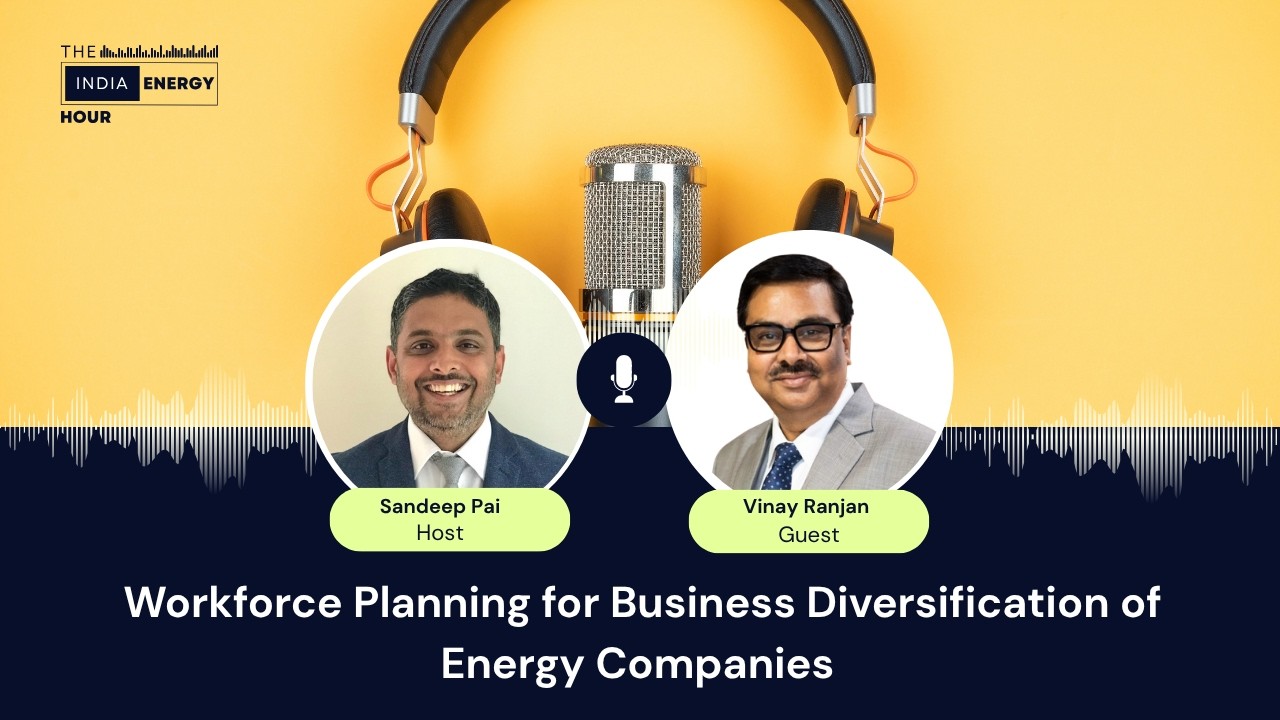
Workforce Planning for Business Diversification of Energy Companies | ft. Vinay Ranjan
Title history
- Workforce Planning for Business Diversification of Energy Companies | ft. Vinay Ranjan — observed on 20261025-1515 UTC (YouTube)
Keywords
Summary
190 words
Critical Evaluation
Value of the Information & Strength of the Argument
The value of this discussion lies in its practitioner perspective, offering concrete, experience-based models for workforce planning in a traditionally rigid sector. Dr. Ranjan’s 5C model and the make-buy-borrow-build framework provide actionable strategies for HR leaders in public sector enterprises undergoing diversification. His argument that HR must be engaged early, with a focus on competencies rather than headcount, is well articulated and supported by real-world examples from his career. The reasoning is coherent, moving from the identification of competency gaps to the design of talent architecture and leadership development. While the argumentation is persuasive, it relies heavily on anecdotal evidence and personal prescriptions rather than empirical data or comparative studies, which limits its scientific rigor but enhances its practicality.
Scientific Rigor, Source Quality, Title Accuracy
The episode does not cite formal studies or external references; it is an expert interview grounded in the speaker’s professional experience. The description lists the organizations behind the podcast but provides no scientific sources. The title aptly captures the theme of workforce planning for business diversification in the energy sector, and the content stays on track. The discussion adheres to the title’s promise, focusing on the specified topic without significant digressions. The lack of cited sources is acceptable given the format, but it means the reliability rests on the speaker’s credibility and the logical consistency of his arguments. No comments or viewer feedback were provided, so no analysis of public reception is possible.
247 words
Title / Content Match
The title faithfully reflects the content, which centers on workforce planning strategies for energy companies diversifying their business, featuring an interview with a former HR director.
Quality & Reliability
7/10
Expert interview based on extensive hands-on HR experience in both public and private sectors. The discussion is insightful but relies on personal prescriptions rather than empirical evidence or formal studies.
Key Moments
Markers derived by PSI from the transcript: the creator did not define chapters.
- Dr. Vinay Ranjan introduces his background, his father's legacy in coal, and his own career transition from private to public sectors.
- He criticizes the common approach where HR is brought in late, recommending workforce planning at least 24 months before any new venture.
- Introduction to the 5C model, starting with the need to identify core competencies required for diversification.
- Detailed explanation of the make-buy-borrow-build talent model, including strategies for internal development and external acquisition.
- Emphasis on creating a distinct talent architecture and an ambidextrous organization to support both core and new businesses.
- Discussion on the need for a different leadership DNA, especially the capability to handle ambiguity in new ventures.
- Contrasting public and private sector approaches, highlighting public sector strength in employee inclusiveness and private sector speed in talent mobility.
Contribution & Novelties
The episode provides a distinctive insider perspective on workforce transition within Indian state-owned energy companies. Dr. Ranjan’s 5C model (Core, Make-Buy-Borrow-Build, Create talent architecture, Build talent market, Create leadership DNA) offers a structured framework not typically found in public HR discourse. The emphasis on blending private-sector speed with public-sector inclusiveness is a nuanced contribution to the energy transition debate.
Pour aller plus loin :
- Workforce planning — Pertinent for understanding fundamental concepts of aligning human resources with organizational needs.
- Just transition — Directly relevant to the ethical and inclusive aspects of workforce shifts in the energy sector.
- Reskilling — Provides background on strategies for retraining employees for new roles, a core topic in the discussion.
- Coal India Limited — Background on the specific organization mentioned, useful for contextualizing the case study.
131 words
Radar Profile
The radar profile shows a moderate balance, with quantity of information scoring relatively high (8/10) but technical depth and reliability scoring lower (6/10 each). This reflects an informative, practitioner-led discussion that is accessible but not highly specialized or backed by rigorous empirical research.