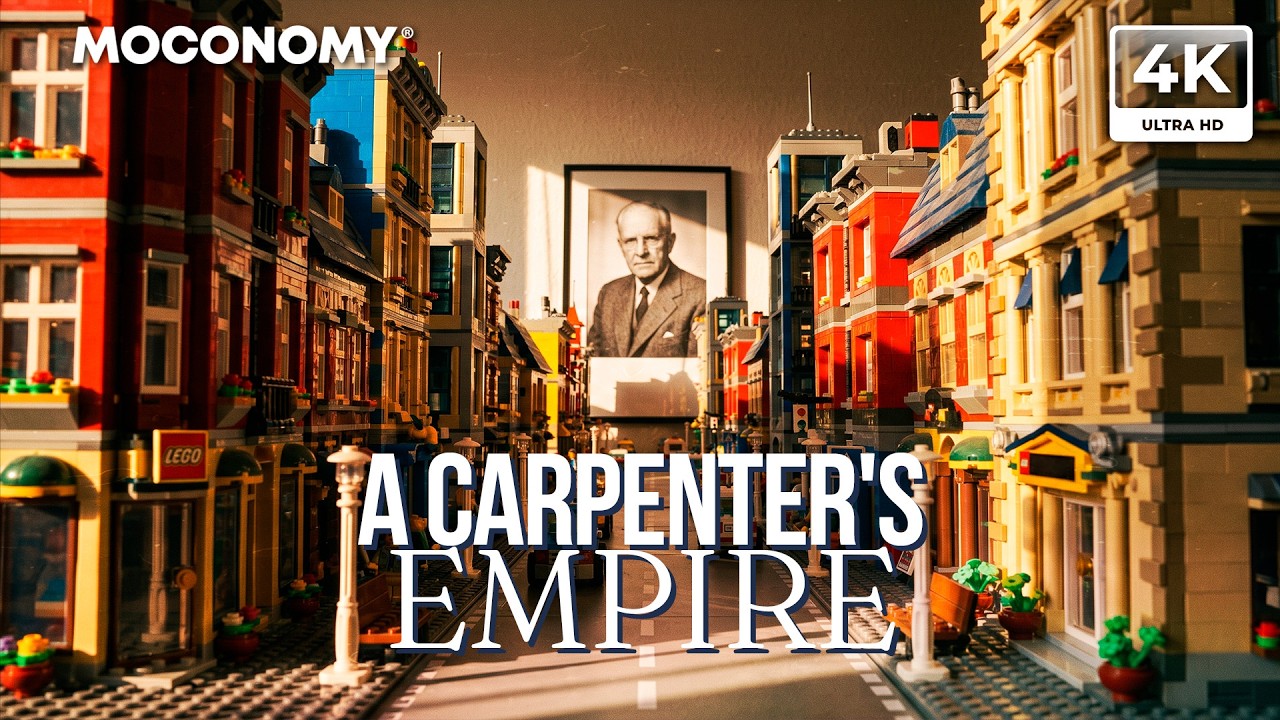
Lego: How One Man Built a Toy Empire | The brick that changed the toy industry forever | 4K
Keywords
Summary
154 words
Critical Evaluation
Value of the Information & Strength of the Argument
The video provides a compelling narrative of LEGO’s business history, effectively covering key turning points: the initial craftsmanship, the fire, the shift to plastic, the patent, the system of play, the licensing era, and the corporate turnaround. It uses interviews with adult fans and community members to illustrate the cultural phenomenon. However, the argumentation is mostly chronological storytelling rather than rigorous analysis. Market figures ($120 billion, 9% share) are stated without citation, and the causal claims (e.g., that licensing saved the company) are presented as self-evident. The turnaround story is well-told but simplifies complex strategic decisions. Overall, the value lies in synthesizing known facts into a coherent narrative, but the lack of critical examination or contrast with competing perspectives weakens its analytical depth.
Scientific Rigor, Source Quality, Title Accuracy
The documentary cites no academic or primary sources directly; it relies on interviews, archival footage, and assertions. The absence of a bibliography or references to specific reports undermines its scientific rigor. The title accurately reflects the content, being neither misleading nor exaggerated. The video is clearly a promotional and educational piece from a production channel, not a peer-reviewed analysis. Comments are not provided, so no public feedback can be assessed. The production quality is high, but the factual foundation is not transparent.
220 words
Title / Content Match
Fully adequate: the title accurately reflects the content, which chronicles Lego's history from its founder to its global status.
Quality & Reliability
6/10
The video is a well-produced corporate documentary with good narrative structure and some expert interviews (AFOLs, exhibitors), but it lacks explicit citations, relies on broad claims about market shares and financial figures without precise sources, and includes a promotional tone. The historical facts are generally accurate but presented without peer-reviewed or verifiable references.
Key Moments
Markers derived by PSI from the transcript: the creator did not define chapters.
- Introduction: the LEGO brick's significance and market overview.
- Early life of Ole Kirk Christiansen and the first fire in 1924.
- The Great Depression and the decision to make wooden toys.
- Naming 'LEGO' and the second fire in 1942.
- Introduction of plastic bricks in 1949 and their early failures.
- The 1958 patent for the stud-and-tube design, creating the modern brick.
- Godtfred's system of play and international expansion.
- 1990s over-expansion, financial crisis, and near-bankruptcy.
- Licensing deals (Star Wars) and the 2004 turnaround led by Jørgen Vig Knudstorp.
- Cultural impact, adult fans, LEGO movies, sustainability efforts, and concluding thoughts.
Cited Sources
- LEGO Group official website — Referenced implicitly as the company behind the story, but not cited directly.
Concurring Sources
- LEGO: The History of the Brick — Encyclopedic overview consistent with the video's historical account.
Contribution & Novelties
The documentary offers a comprehensive, emotionally engaging retelling of LEGO’s corporate history, emphasizing the founder’s resilience and the brand’s cultural resonance. Its novelty lies in the compilation of well-known facts into a single narrative with interviews and modern community perspectives, rather than presenting new research. The ‘kidult’ phenomenon and the role of licensing are highlighted effectively.
Pour aller plus loin :
- LEGO history on Wikipedia — Provides a detailed factual timeline corroborating the main events.
- Jørgen Vig Knudstorp biography — Background on the CEO who led the turnaround.
- LEGO Group financial reports — Official financial data for verifying market figures.
- The LEGO Brick patent — Original 1958 patent for the stud-and-tube coupling.
112 words
Radar Profile
The radar profile shows moderate scores on information quantity and quality, with lower technical depth and reliability. This reflects a documentary that tells a rich story but relies on unverified figures and lacks rigorous sourcing. The balance suggests a useful overview for a general audience, but not a definitive academic reference.