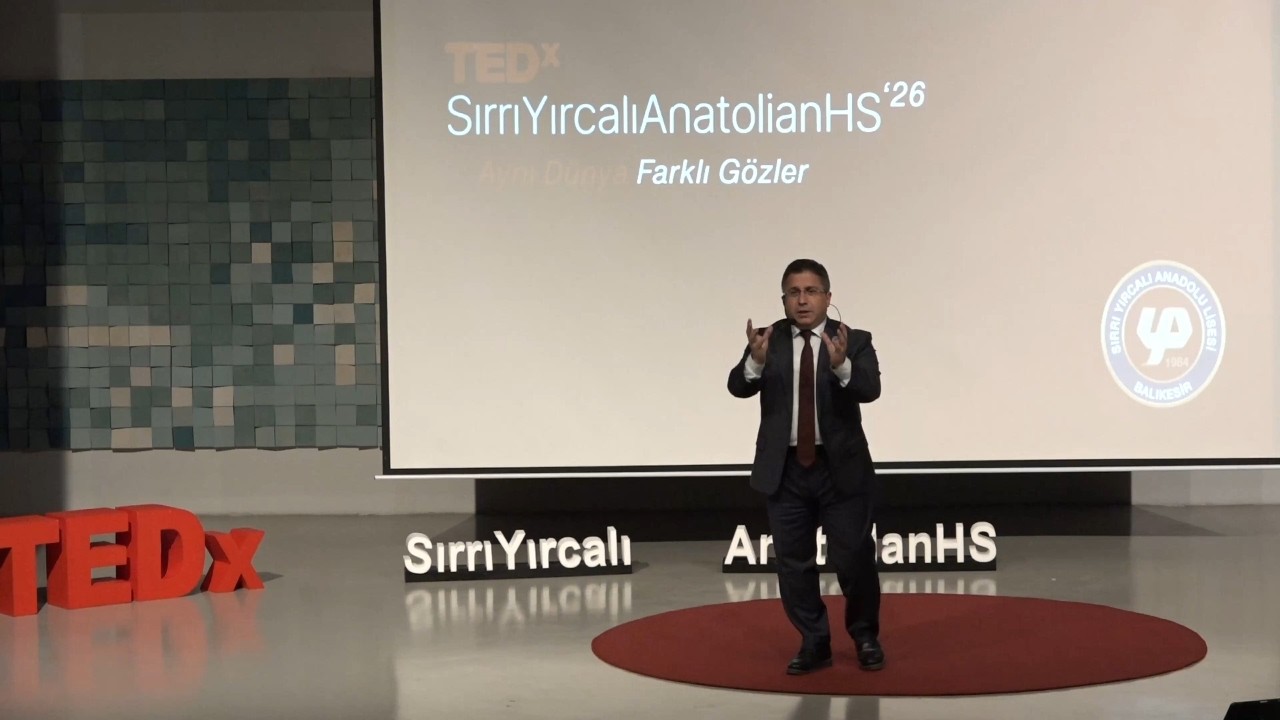
İnsan Kalmayı Başarabilmek! | Yücel Oğurlu | TEDxSırrı Yırcalı Anatolian HS
Title history
- İnsan Kalmayı Başarabilmek! | Yücel Oğurlu | TEDxSırrı Yırcalı Anatolian HS — observed on 20261027-0221 UTC (YouTube)
Keywords
Summary
125 words
Critical Evaluation
Value of the Information & Strength of the Argument
The talk offers introspective, experience-based wisdom rather than empirical data. Its value lies in the sincerity and coherence of the personal narrative, which encourages audience members to reflect on their own values. The argumentation relies on anecdotal evidence and ethical reasoning, effectively combining personal stories with universal principles. While not scientific, the speaker’s authority as a seasoned academic leader adds weight to his viewpoints.
Scientific Rigor, Source Quality, Title Accuracy
The talk does not cite formal sources, but it references literary and philosophical figures (Mark Twain, Pascal, Paulo Coelho) without providing specific contexts. The description includes a link to TEDx platform for general information. The title accurately captures the core message, being an apt descriptor of the talk’s theme. Audience comments, if any, are not provided; hence, no public reception analysis is possible.
142 words
Title / Content Match
The title accurately reflects the content: a talk about preserving one's humanity amidst success and life's challenges.
Quality & Reliability
5/10
Personal reflection with anecdotal evidence; credible but not scientifically rigorous; relies on personal experience and cultural references.
Key Moments
Markers derived by PSI from the transcript: the creator did not define chapters.
- Introduction on the art of being concise, quoting Mark Twain and a Turkish anecdote.
- Learning from every person: 'Every human is a book, a flower' and seeking collective wisdom.
- True success involves remaining human and upholding dignity, not just professional achievement.
- Language learning anecdote: how knowing obscure languages created opportunities and connections.
- Concluding advice: never despise anyone, value friendship, and see family as a sanctuary.
Cited Sources
- TEDx Program — Information about the TEDx event format and context for this talk.
Concurring Sources
- Empathy — Supports the importance of empathy in social relationships and success.
- Self-esteem — Relates to the talk's emphasis on self-respect as a foundation for disciplined life.
Contribution & Novelties
The talk offers a personal and culturally grounded perspective on the concept of success, emphasizing moral integrity and human connection over material achievement. Its novelty lies in the integration of Turkish cultural values (e.g., ‘şeref candan azizdir’ - honour is dearer than life) with universal themes. The speaker’s concrete examples, such as his multilingual experiences, illustrate practical applications of lifelong learning.
Pour aller plus loin :
- Ubuntu philosophy — Collective humanity and mutual care, akin to the speaker’s emphasis on empathy.
- Arete — Excellence and moral virtue, aligning with the talk’s call for integrity.
- Paideia — Holistic education of character, relevant to the discussion of early childhood formation.
108 words
Radar Profile
The scores show a balanced but modest profile: information quantity and quality are moderate, technical depth is low (as expected for a personal talk), but overall reliability is acceptable due to the speaker's credible background. The emphasis on humanistic values is clear, though it lacks empirical grounding.