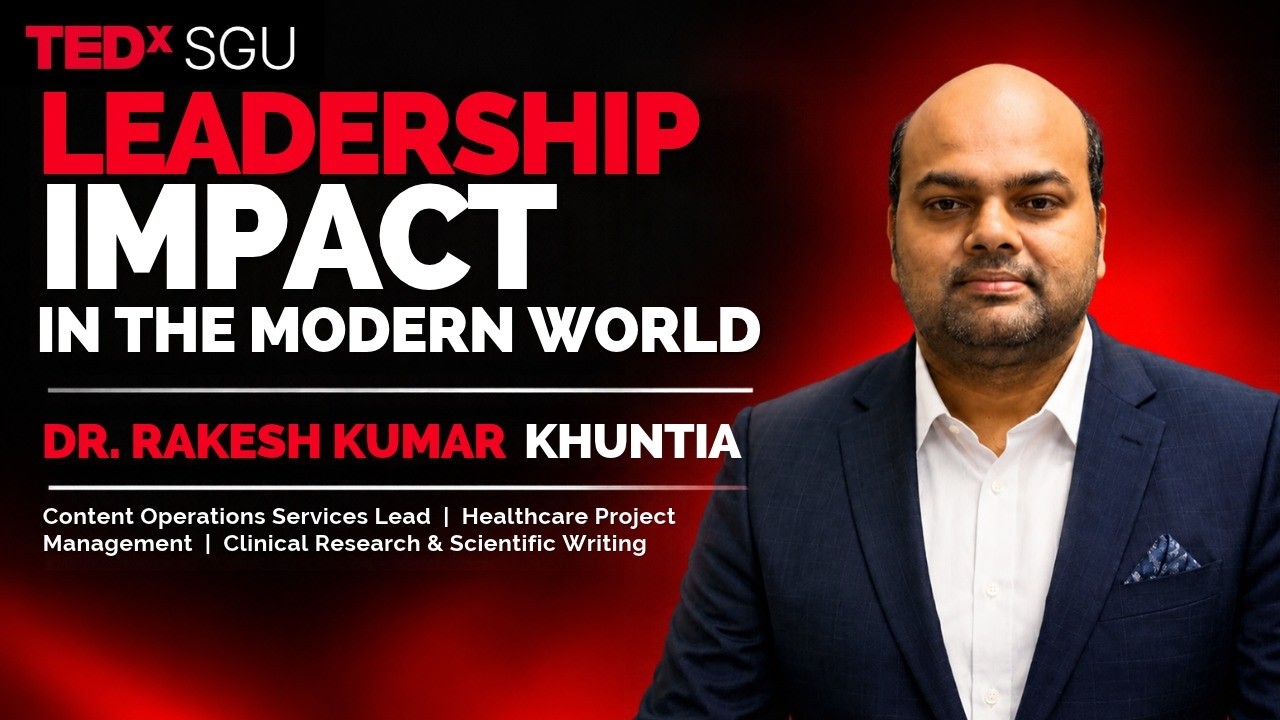
Leadership Impact In the Modern World | Dr. Rakesh Kumar Khuntia | TEDxSGU
Keywords
Summary
64 words
Critical Evaluation
Value of the Information & Strength of the Argument
VALUE OF INFORMATION: The talk offers practical, experience-based insights on leadership, emphasizing everyday behaviors over formal authority. It mentions credible research (Google’s team effectiveness study, Edelman’s trust data) but does not provide in-depth analysis or data. The value lies in the clarity of its message and relatability, rather than empirical rigor. STRENGTH OF ARGUMENTATION: The argument is coherent and structured, moving from personal stories to broader principles, then to actionable tools (GROW, SBI). The speaker uses rhetorical devices and quotes to reinforce his points, making the reasoning persuasive but largely anecdotal.
Scientific Rigor, Source Quality, Title Accuracy
SCIENTIFIC RIGOR: The talk is not scientifically rigorous; it is a motivational speech grounded in subjective experience. References to research are brief and not systematically cited. QUALITY OF SOURCES: The sources mentioned (Google, Edelman, quotes from Bill Gates, Bob Iger, etc.) are credible but not properly cited with URLs or detailed findings. The only source provided in the description is the TEDx official page. TITLE ADEQUACY: The title ‘Leadership Impact In the Modern World’ is broad and matches the overall theme, though the described subtitle ‘The Ripple Nobody Applauds’ is never mentioned in the talk itself, which might confuse viewers expecting a different focus.
210 words
Title / Content Match
The title suggests a general discussion on leadership impact, and the talk indeed focuses on how behavior influences leadership, though the description mentions a more specific theme ('The Ripple Nobody Applauds').
Quality & Reliability
5/10
The content is based on personal anecdotes and references to well-known studies (Google's Project Aristotle, Edelman Trust Barometer), but without detailed methodology or verification. It is more motivational than scientific.
Key Moments
Markers derived by PSI from the transcript: the creator did not define chapters.
- Introduction: definition of leadership beyond titles
- Story of the borrowed lamp in his village
- School experience: earning trust as pupil leader
- College experience: class representative and advocacy
- Leadership at home and in community: creating belonging
- Workplace: psychological safety and team climate
- Tools for leadership: GROW model and SBI accountability
- Conclusion: call to action and ripple effect
Cited Sources
- TEDx Talks official page — Information about TEDx events and format
Contribution & Novelties
The talk’s originality lies in connecting personal, community, and corporate experiences into a unified leadership framework based on behaviors, rather than formal positions. It highlights the ‘ripple effect’ of everyday actions, emphasizing that leadership is multiplied through millions of small moments. The speaker provides practical tools like GROW and SBI, making the content actionable.
Pour aller plus loin :
- Google re:Work - Guide to understanding team effectiveness — This resource details the Project Aristotle findings on psychological safety and team performance.
- Edelman Trust Barometer — Recent global data on trust in institutions and workplaces, including employee trust in employers.
- GROW Model - Wikipedia — A coaching framework referenced in the talk for goal setting and problem-solving.
116 words
Radar Profile
The scores reflect a moderate profile: low technical depth but moderate information quality and reliability. The talk is engaging but lacks empirical rigor, making the radar plot show balance between personal insight and general knowledge.