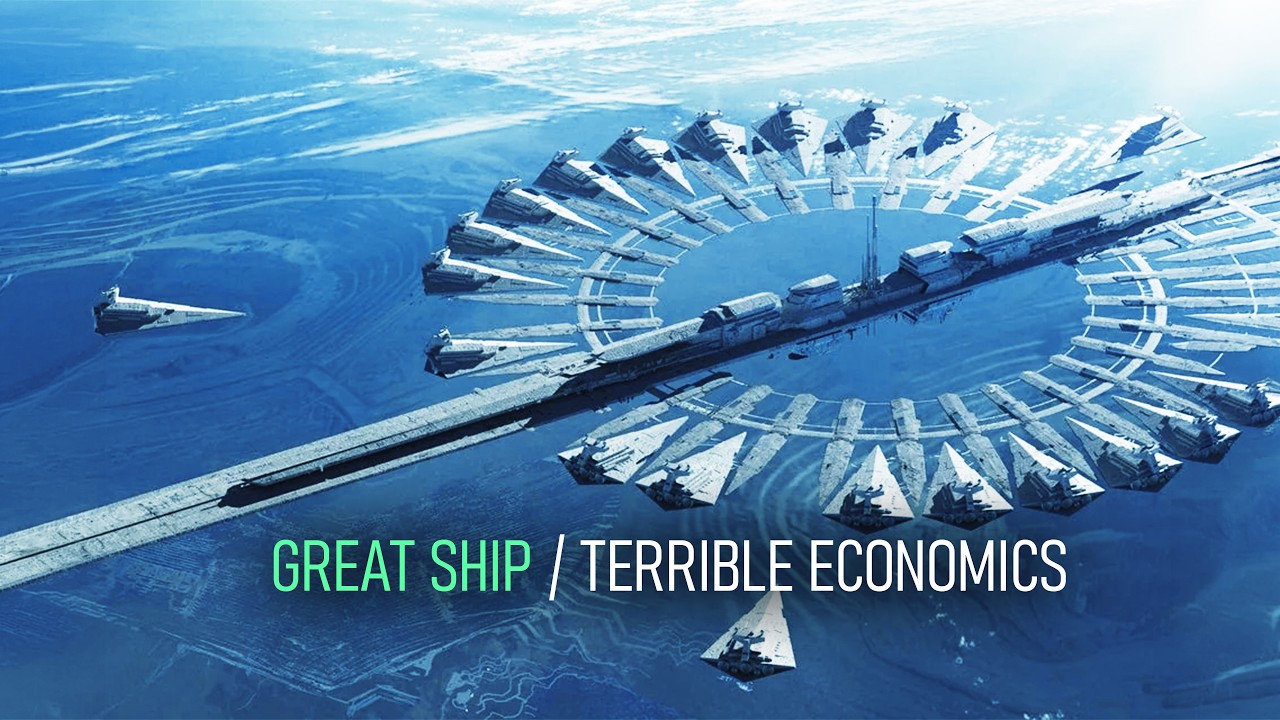
Amazing Starships... with terrible Economics
Keywords
Summary
160 words
Critical Evaluation
Value of the Information & Strength of the Argument
The video provides a compelling argument that economic factors are often overlooked in military procurement analysis. It uses specific examples from Star Wars lore to illustrate concepts like fixed costs, economies of scale, and opportunity costs. The reasoning is logical, connecting each ship’s design and strategic context to its economic failure. However, the argumentation relies heavily on subjective interpretation of fictional events and does not offer counterarguments or external validation. The value lies in its educational approach to defense economics through a popular culture lens, making abstract concepts accessible.
Scientific Rigor, Source Quality, Title Accuracy
The video does not cite any scientific sources, relying solely on the creator’s knowledge of Star Wars canon. The absence of references weakens its rigor, though the internal consistency of the lore exceeds typical fan content. The title accurately matches the content: it focuses on starships with impressive capabilities but flawed economics. A sponsored segment of approximately two minutes appears around the 3:00–5:00 mark, promoting a financial management product, which is disclosed but not integrated into the analysis. No external sources are provided in the description, so the viewer cannot verify claims independently.
197 words
Title / Content Match
The title accurately reflects the content, which highlights ships with impressive capabilities but flawed cost-effectiveness.
Quality & Reliability
5/10
The video offers a subjective analysis of fictional starship economics without citing scientific sources or verifiable data. While the reasoning is coherent and well-structured, the reliability is limited by the absence of factual references and the speculative nature of the subject.
Key Moments
Markers derived by PSI from the transcript: the creator did not define chapters.
- Introduction to the concept of starship economics and the Interdictor cruiser's cost issues.
- Sponsored segment begins, briefly paused to continue the analysis.
- Discussion on the Dreadnaught-class heavy cruiser and its massive automated fleet failure.
- Analysis of the Venator-class star destroyer, its effectiveness, and premature decommissioning.
- The R170 starfighter and its misuse in battle, leading to cancellation.
- Imperial-class star destroyer weaknesses and the collapse of logistics post-Endor.
- The Mark I Starhawk and its questionable tractor beam design.
- Executor-class star dreadnought as a wasteful concentration of resources.
- Conclusion summarizing why the ships were bad investments despite tactical merits.
Contribution & Novelties
The video contributes an original framework for evaluating fictional starship designs through an economic lens, highlighting principles like fixed costs, opportunity cost, and strategic efficiency. It encourages viewers to think beyond raw firepower in military analysis. To further explore these ideas, consider the following:
- Defense economics — Relevant for understanding resource allocation in military procurement.
- Economies of scale — Applies to the Interdictor’s R&D costs spread over a single unit.
- Military procurement — Directly relates to the video’s core theme of inefficient acquisition decisions.
84 words
Radar Profile
The radar profile shows high scores in information quantity and quality, moderate technical level, and low reliability. This reflects a well-informed but unsourced analysis, typical of higher-quality fan commentary on fictional universes.