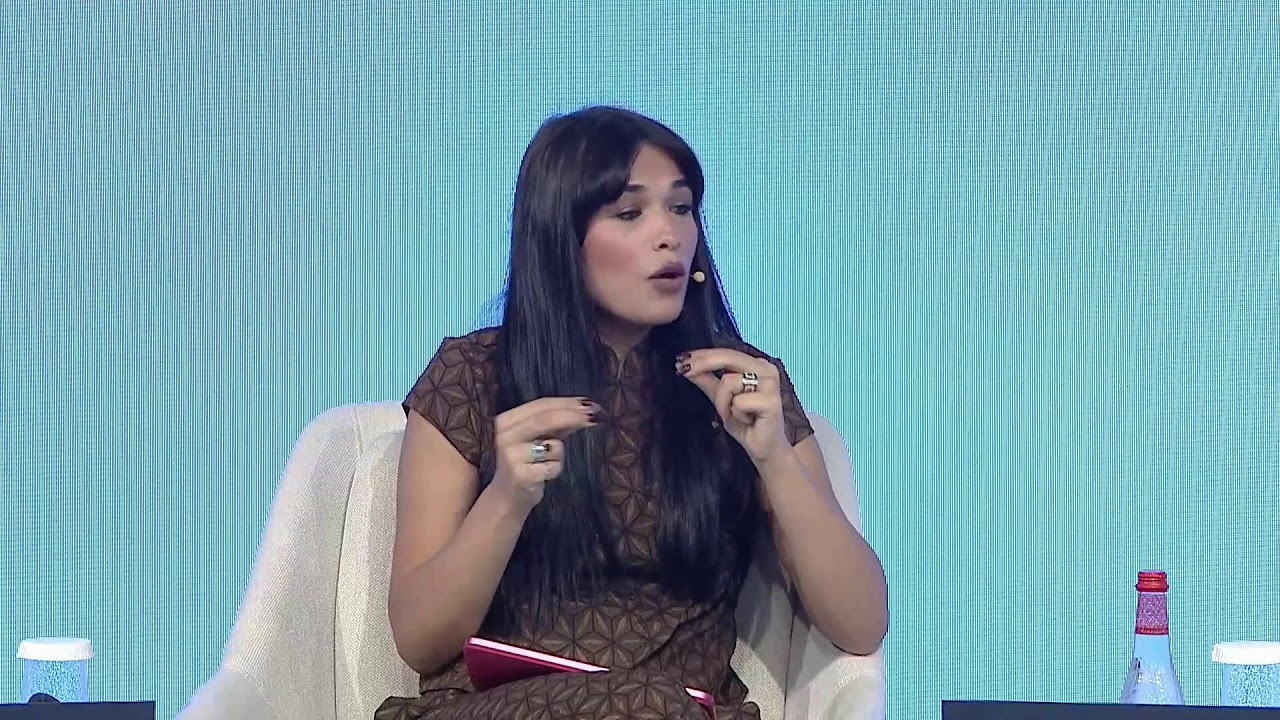
Betazone: The Human-Machine Line
Keywords
Summary
195 words
Critical Evaluation
Value of the Information & Strength of the Argument
The video provides thoughtful advocacy for rethinking robot design, emphasizing emotional connection and interpretability over raw automation. Gannon’s argument that personality should replace screen-based interfaces is compelling and backed by her artistic demonstrations. Mitra adds a reality check by highlighting the scale of industrial challenges and the incremental gains in efficiency. His point that a robot achieves only about 92 picks per minute versus a human’s 42, while industry requires 600, underscores the limitations of current technology. The arguments are coherent, but the discussion remains at a conceptual level; neither speaker provides substantial empirical evidence or case-study details. The value lies in the interdisciplinary dialogue that bridges design and industry, though the lack of rigorous data (e.g., safety metrics, cost-benefit analyses) weakens the argumentative foundation.
Scientific Rigor, Source Quality, Title Accuracy
The panel does not cite specific sources or studies; it relies on the speakers’ personal experiences and general statistics (e.g., 2 billion tons of waste, 8% recycling rate). While these figures are plausibly derived from public data, they are not attributed. The title ‘Betazone: The Human-Machine Line’ is apt, as the conversation repeatedly explores the blurred boundary between human and machine roles. However, the term ‘Betazone’ is not explicitly defined, which might confuse viewers. The content matches the title well, and the episode is part of a broader WEF format that typically features expert discussions rather than deep scientific analyses. The absence of references limits the scientific rigor, but the expertise of the speakers lends some credibility.
257 words
Title / Content Match
The title appropriately captures the core theme of the boundary between humans and machines, which the content addresses through discussion of collaboration, autonomy, and industrial applications.
Quality & Reliability
7/10
Speakers are recognized experts in robotics and industrial AI, offering balanced perspectives but relying on anecdotal examples and projections rather than empirical data.
Key Moments
Markers derived by PSI from the transcript: the creator did not define chapters.
- Moderator Dana Alomar introduces the panel and the topic.
- Madeline Gannon presents her thesis on personality as the interface for physical AI.
- Gannon discusses using industrial robots to create art installations and cultural experiences.
- Ambarish Mitra shares the industrial perspective on waste sorting and AI.
- Debate over autonomy and the trade-off of control in human-robot collaboration.
- Discussion on the distraction of humanoids versus more mundane applications.
- Exchange about the future of robot bodies dematerializing into everyday objects.
- Final audience question and closing thoughts on the business case for robots.
Contribution & Novelties
The video contributes a fresh perspective on human-robot interaction by advocating for ‘personality’ as the central design element, contrasting with the common focus on function and efficiency. It also highlights the gap between flashy humanoid demos and the gritty reality of industrial AI, as illustrated by waste sorting. The discussion suggests that the most impactful robotics will be ‘dematerialized’ into ambient environments, not anthropomorphic forms. This viewpoint is valuable for designers and policymakers, though it lacks a systematic framework.
Pour aller plus loin :
- Human-robot interaction — Provides foundational concepts on how humans and robots communicate and collaborate.
- Humanoid robot — Overview of humanoid robots, their history and capabilities, relevant to the debate on their future.
- Waste sorting — Explains technologies and challenges in automated waste sorting, a key example in the industrial discussion.
- Artificial intelligence — Background on AI systems and their industrial applications, useful for understanding the intelligence side of robots.
153 words
Radar Profile
The radar profile shows a balanced but moderate shape, with no single score exceeding 7. This indicates a fairly solid but not exceptional video: adequate information quantity and quality, moderate technical depth, and acceptable reliability. The weakest point is reliability, reflecting the absence of cited sources and the reliance on personal opinions.