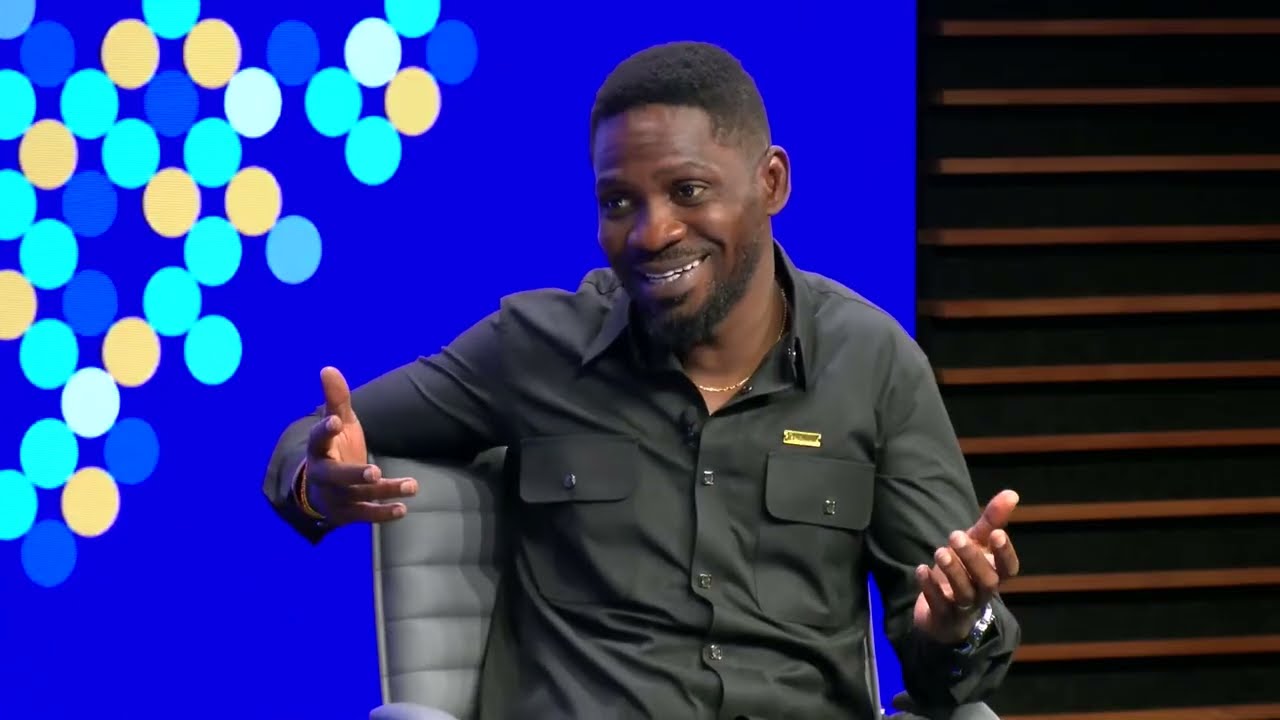
Leading without a title: Bobi Wine on building a people's movement
Title history
- Leading without a title: Bobi Wine on building a people's movement — observed on 20261105-2051 UTC (YouTube)
Keywords
Summary
174 words
Critical Evaluation
Value of the Information & Strength of the Argument
The value of this interview lies in its unfiltered personal testimony from a key political figure, offering rare insights into the lived experience of opposing a repressive regime. Wine’s argumentation is coherent and persuasive, grounded in concrete events and personal sacrifices. He effectively argues that the fear of consequences is outweighed by the greater harm of inaction, and he makes a compelling case for decentralized leadership as a resilience strategy. However, the argumentation is primarily emotional and experiential rather than analytical, lacking in systemic or comparative analysis.
Scientific Rigor, Source Quality, Title Accuracy
Scientifically, this is not rigorous research but a personal account; it relies on anecdotal evidence and the speaker’s own perspective. The sources are implicit, referencing specific events and individuals (e.g., General Muhoozi Kainerugaba, Dr. Besigye) but without citations or verifiable data. The title accurately reflects the content, as the entire conversation centers on leading without formal authority and building a people’s movement.
164 words
Title / Content Match
Excellent match: the discussion directly addresses building a political movement without holding institutional office, as described in the title.
Quality & Reliability
7/10
Bobi Wine provides credible firsthand testimony on political repression and opposition strategy, but the discussion is anecdotal and lacks empirical evidence.
Key Moments
Markers derived by PSI from the transcript: the creator did not define chapters.
- Bobi Wine explains that his motivation came from desperation, not inspiration.
- He discusses using music to lead and sensitize young people on social issues.
- Description of the 2021 election aftermath and the beginning of his political awakening.
- He recounts the 2026 election, house arrest, and his escape from the military.
- Wine emphasizes the importance of giving the movement away to the people and making everyone a leader.
- He expresses concerns about potential violence and criticizes the international community's complacency.
- Invitation to the October 30th coalition event for political prisoners.
Cited Sources
- Atlantic Council — Host organization of the Global Leadership Forum.
- National Endowment for Democracy — Damon Wilson is president; supports political prisoners and democracy movements.
- October 30th coalition — Coalition to mark International Political Prisoners Day.
- Global Leadership Center — Part of the Atlantic Council, formerly the Millennium Leadership Program.
Contribution & Novelties
This interview contributes a rare, personal narrative of opposition leadership under extreme repression, highlighting the strategy of proliferating leadership to withstand authoritarian targeting. It underscores the psychological and emotional dimensions of resistance, often absent in academic analyses.
Pour aller plus loin :
- Bobi Wine (Wikipedia) — Background on his political career and background.
- Nonviolent resistance (Wikipedia) — Theoretical framework for the movement’s approach.
- Youth bulge (Wikipedia) — Demographic factor relevant to his emphasis on youth involvement.
76 words
Radar Profile
The radar profile shows a high score in 'qualite_information' and 'fiabilite_globale', reflecting the credibility of personal testimony, but a low 'niveau_technique', indicating the content is non-scientific and lacks formal analysis. This is consistent with an expert opinion format.