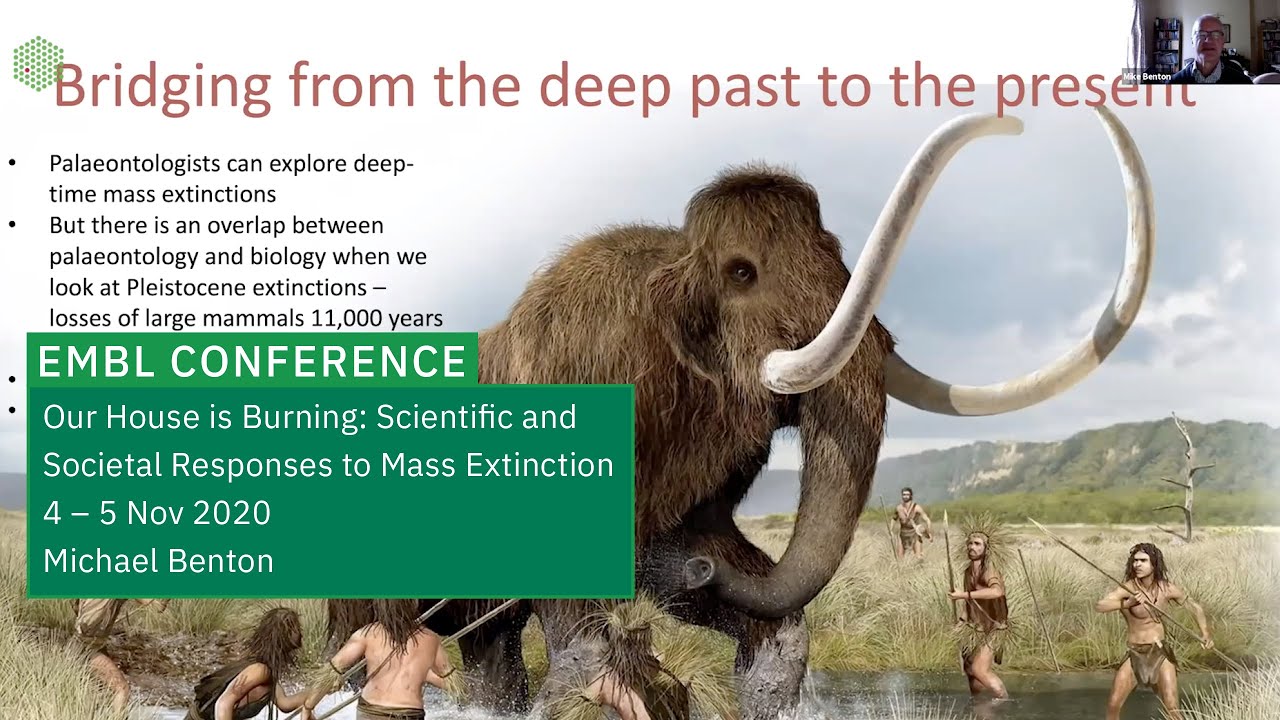
EMBL Keynote Lecture: The evidence for mass extinctions
Title history
- EMBL Keynote Lecture: The evidence for mass extinctions — observed on 20261025-2236 UTC (YouTube)
Keywords
Summary
227 words
Critical Evaluation
Value of the Information & Strength of the Argument
The informational value is high: Benton methodically builds a case using quantitative data (species loss percentages, isotopic measurements, time scales) and walks through the entire evidence chain—from the initial Alvarez iridium discovery to independent confirmations via shocked quartz, melt droplets, and crater geophysics. He demonstrates intellectual honesty by acknowledging when ideas were initially speculative and how they were subsequently validated. The Hull et al. high-precision dating study is particularly compelling, showing how methodological advances can settle scientific controversies. Slater’s computational approach exemplifies the evolution of paleontology from pattern description to process testing. Throughout, Benton maintains a clear distinction between well-established findings and areas of ongoing debate, such as the equatorial dead zone and the nature of recovery dynamics. The argumentation is consistently solid, with each major claim supported by specific publications and reproducible evidence.
Scientific Rigor, Source Quality, Title Accuracy
Scientific rigor is exemplary. Benton, a professor at the University of Bristol, draws on peer-reviewed literature including the foundational Alvarez et al. (1980) Science paper, recent work by Hull and colleagues published in Science, Slater’s computational study (2013), and field studies by Wignall and colleagues. He explicitly references colleagues and discusses methodological caveats, including dating precision and limitations of fossil sampling. Multiple independent lines of evidence—iridium anomalies, shocked quartz, isotope records, crater geophysics—demonstrate robust scientific practice and cross-validation. The title accurately reflects the content, matching the lecture’s systematic presentation of evidence for mass extinctions.
243 words
Title / Content Match
The title accurately describes the content, as the lecture systematically presents geological and paleontological evidence for mass extinctions, with detailed treatment of the two best-documented events.
Quality & Reliability
9/10
Michael Benton is a leading paleontologist at the University of Bristol. The lecture relies on established scientific literature (Alvarez et al. 1980, Hull et al. 2020, Slater 2013) and multiple independent lines of evidence, including iridium anomalies, shocked quartz, isotope records from hundreds of locations, and high-resolution geochronology. He clearly distinguishes confirmed findings from debated points and explains methodological caveats, such as dating precision and sampling limitations.
Key Moments
Markers derived by PSI from the transcript: the creator did not define chapters.
- Introduction: themes of the lecture, definitions of extinction and mass extinction
- Background extinction as a normal process, species durations in different groups
- The 'big five' mass extinctions: defining features of high, ecologically broad-based extinction rates
- Alvarez hypothesis: the iridium anomaly at the K-Pg boundary in Gubbio, Italy
- Confirmation of the Chicxulub crater: shocked quartz, tsunami evidence, and geophysical detection
- Deccan Traps volcanic alternative hypothesis for the K-Pg extinction
- Hull and colleagues: high-precision dating resolves the impact vs volcanism debate
- Slater's computational study: competitive release model for mammalian takeover after the dinosaurs
- Permian-Triassic mass extinction: over 90% species loss, evidence from South China sections
- Meishan section isotope data: carbon spikes, 10-15°C warming, and repeated perturbations
- Equatorial dead zone and closing link between past volcanic-driven crises and present-day anthropogenic change
Cited Sources
- Alvarez, L.W., et al. (1980). Extraterrestrial cause for the Cretaceous-Tertiary extinction. Science. — Foundational paper establishing the impact hypothesis through the discovery of the iridium anomaly at the K-Pg boundary
- Hull, P.M., et al. (2020). High-resolution geochronology discriminating impact and Deccan Traps volcanism. Science. — Recent high-precision dating showing the impact coincided with the extinction boundary, resolving the debate with volcanism
- Slater, G. (2013). Computational phylogenetic study of mammalian diversification after the K-Pg extinction. PNAS. — Model testing supporting the competitive release hypothesis for mammalian takeover after dinosaur extinction
- Wignall, P. and colleagues - field documentation of the Permian-Triassic boundary at Meishan and elsewhere — Stratigraphic and geochemical evidence for the Permian-Triassic mass extinction, including carbon isotope spikes
- Sun and colleagues - equatorial dead zone hypothesis — Documentation of a latitudinal band barren of life during the early Triassic, consistent with extreme warming
Concurring Sources
- Chicxulub crater - Wikipedia — Confirms the impact structure predicted by Alvarez and colleagues, identified by geophysical methods
- Cretaceous-Paleogene boundary - Wikipedia — Corroborates the stratigraphic context of the iridium anomaly and the extinction horizon
Contribution & Novelties
The lecture’s original contribution lies in its clear synthesis of recent advances in high-resolution geochronology that have resolved long-standing debates about mass extinction causes. It uniquely bridges the impact-driven and volcanism-driven models, demonstrating through Hull et al. that precise dating can discriminate between coincident events. The discussion of Slater’s computational approach represents a methodological shift from pattern description to process testing in paleontology. The emphasis on repeated carbon cycle perturbations over 5-6 million years after the Permian-Triassic boundary adds nuance to understanding recovery dynamics. The lecture’s relevance extends to the present day by drawing explicit parallels between past volcanic-driven warming events and current anthropogenic environmental change.
Pour aller plus loin :
- Alvarez hypothesis — The original impact hypothesis for the K-Pg extinction, central to the lecture’s narrative.
- Cretaceous–Paleogene extinction event — Comprehensive overview of the end-Cretaceous extinction and its causes.
- Permian–Triassic extinction event — The largest known mass extinction, driven by volcanic activity and warming.
- Siberian Traps — The volcanic province associated with the end-Permian crisis.
- Chicxulub crater — The impact structure that confirmed the Alvarez prediction.
177 words
Radar Profile
The profile is consistently high across all dimensions, with particular strength in information quality and reliability, reflecting Benton's authoritative position and the well-documented nature of the evidence presented. The slightly lower technical level score indicates the content, while rigorous, remains accessible to an interdisciplinary scientific audience.