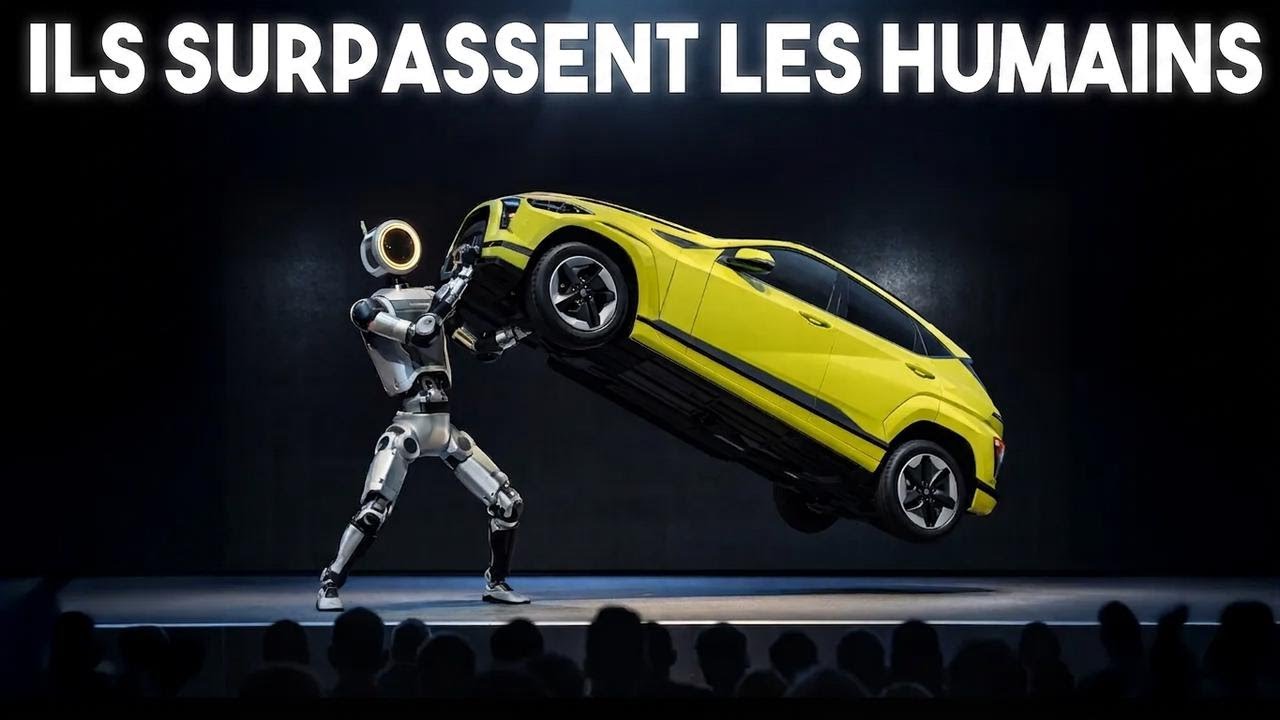
Boston Dynamics a remporté la course aux robots IA grâce à cette seule décision
Boston Dynamics won the AI robot race thanks to this single decision
Keywords
Summary
194 words
Critical Evaluation
Value of the Information & Strength of the Argument
The video provides a compelling narrative that connects Boston Dynamics’ technical achievements with Hyundai’s manufacturing strengths, offering a plausible explanation for why Hyundai succeeded where others failed. The argument is structured around the idea that having a real industrial application and the ability to produce key components at scale is crucial. However, the video relies heavily on anecdotal evidence and unverified claims, such as the production being sold out and specific cost figures. The argumentation is persuasive but lacks rigorous evidence, making it more of an opinion piece than a factual analysis.
Scientific Rigor, Source Quality, Title Accuracy
The video does not cite specific sources for its claims, and the only links in the description are to a promotional offer and a Spotify channel. The title accurately reflects the content, but the lack of verifiable sources undermines the scientific rigor. The video mentions some real events and technologies, but the details are often presented without citation, making it difficult to assess their accuracy.
172 words
Title / Content Match
The title accurately reflects the video's focus on Boston Dynamics' strategic advantage in the humanoid robot race.
Quality & Reliability
6/10
The video presents a plausible narrative but relies on unverified claims, lacks direct citations, and includes promotional content. The technical details are plausible but not sourced.
Key Moments
Markers derived by PSI from the transcript: the creator did not define chapters.
- Introduction to Atlas production announcement and the question of why Hyundai succeeded.
- Fukushima disaster and the need for humanoid robots.
- Origins of Boston Dynamics and the DARPA Robotics Challenge.
- Google and SoftBank failures and lessons learned.
- Hyundai's strategy and the role of actuators.
- New Atlas robot features and capabilities.
- AI integration and economic model.
- Future of robotics and industrial implications.
Cited Sources
- Mintos investment platform — Promotional link for investment platform, not a source for the video's claims.
- AI Revolution en Français on Spotify — Link to the channel's Spotify podcast, not a source for the video's claims.
Contribution & Novelties
The video offers a unique perspective on why Hyundai succeeded in commercializing humanoid robots, emphasizing the importance of manufacturing capabilities and existing supply chains. It provides a detailed look at the new Atlas robot’s specifications and its integration with AI systems.
Pour aller plus loin :
- Boston Dynamics official website — Official information about Atlas and other robots.
- Hyundai Motor Group — Corporate information about Hyundai’s investments in robotics.
- DARPA Robotics Challenge — Official DARPA page for the competition that spurred humanoid robot development.
84 words
Radar Profile
The radar profile shows moderate scores across all dimensions, with a slight peak in quantitative information. This suggests the video provides a substantial amount of information but with limited depth and reliability, typical of a popular science presentation.