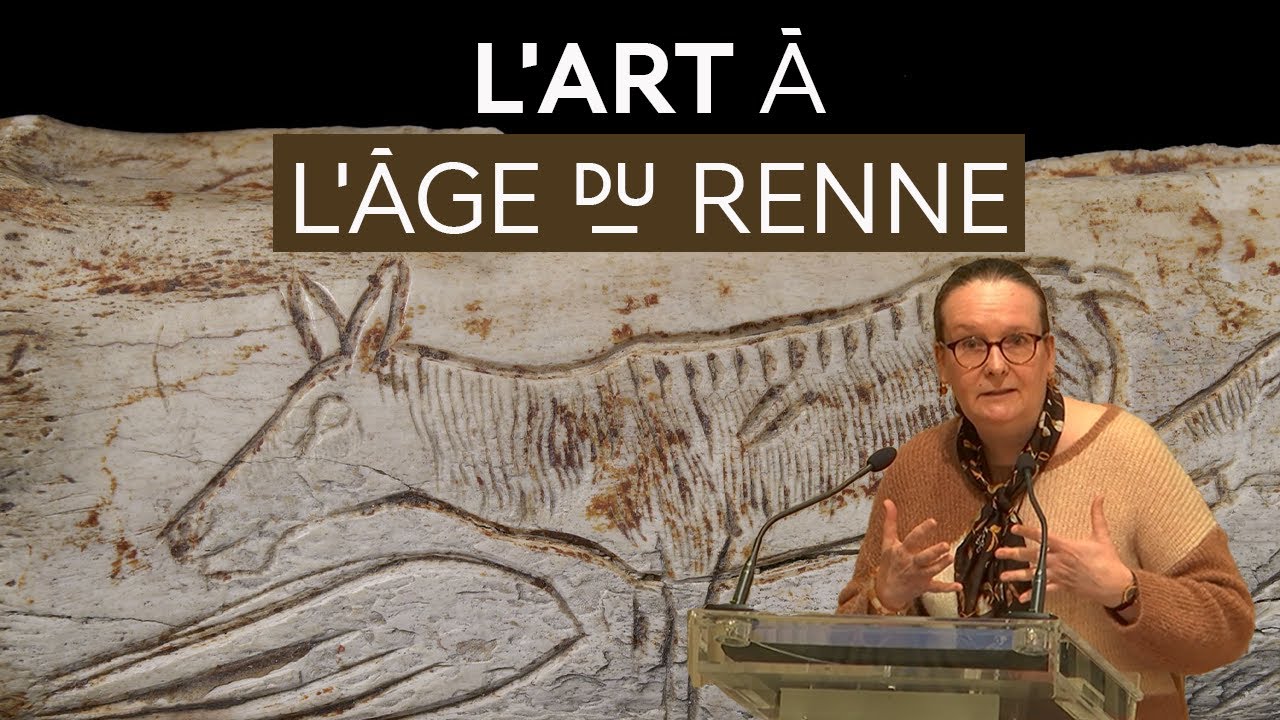
Les biches du Chaffaud
The does of Le Chaffaud
Keywords
Summary
144 words
Critical Evaluation
Value of the Information & Strength of the Argument
The lecture provides valuable insights into the history of archaeology, using the specific case of the Chaffaud hinds to illustrate the slow acceptance of prehistoric art. The argumentation is solid, based on primary sources such as letters, inventories, and early publications. Schwab carefully distinguishes between facts and hypotheses, for example when discussing the possible meaning of the signs. The narrative is well-structured, moving from the discovery to the recognition, and effectively demonstrates how the object’s biography reflects the evolution of archaeological thought.
Scientific Rigor, Source Quality, Title Accuracy
The scientific rigor is high: the speaker is a recognized expert, and the content is grounded in archival research and museum collections. The sources cited are mostly historical documents and museum records, which are appropriate for the topic. The title accurately reflects the content, focusing on the object and its historical significance. The lecture does not present new research but synthesizes existing knowledge in a clear and engaging manner.
166 words
Title / Content Match
The title accurately reflects the content, which focuses on the engraved bone fragment known as 'Les biches du Chaffaud' and its historical significance.
Quality & Reliability
8/10
The lecture is given by a senior heritage curator, Catherine Schwab, who demonstrates deep knowledge of the subject, relying on archival documents and museum collections. The historical account is well-documented, with references to primary sources such as letters and inventories. The interpretation of the object is cautious, acknowledging uncertainties. The presentation is clear and well-structured, though it lacks explicit citations of recent scientific literature.
Key Moments
Markers derived by PSI from the transcript: the creator did not define chapters.
- Introduction to the three national museums holding prehistoric art collections.
- Discussion of Boucher de Perthes and his 'pierres figures'.
- Presentation of the Chaffaud hinds: description, material, and iconography.
- The discovery context and the role of Prosper Mérimée.
- The recognition of the object as prehistoric and its entry into the museum.
- Comparison with other early discoveries of mobiliary art.
- Conclusion and the importance of these objects in the history of archaeology.
Cited Sources
- Conférence page on the Musée de l'Homme website — Link provided in the video description for more information about the conference.
Concurring Sources
- Musée d'Archéologie Nationale — The museum where the object is now housed, and where the speaker works.
Contribution & Novelties
The lecture offers a detailed historical account of the Chaffaud hinds, emphasizing the role of archival research in correcting past errors. It highlights the importance of museum collections in understanding the development of prehistoric archaeology. The speaker provides a nuanced interpretation of the object’s iconography, linking it to broader themes in Paleolithic art.
Pour aller plus loin :
- Art mobilier — Wikipedia article on mobiliary art, providing context on the category of artifacts.
- Magdalénien — Wikipedia article on the Magdalenian culture, the period to which the object is attributed.
- Prosper Mérimée — Wikipedia article on Prosper Mérimée, who made the first tracing of the engraving.
105 words
Radar Profile
The radar profile shows high scores in information quantity, quality, and reliability, reflecting the expert presentation and well-documented content. The technical level is moderate, making the lecture accessible to a general audience while still providing depth.