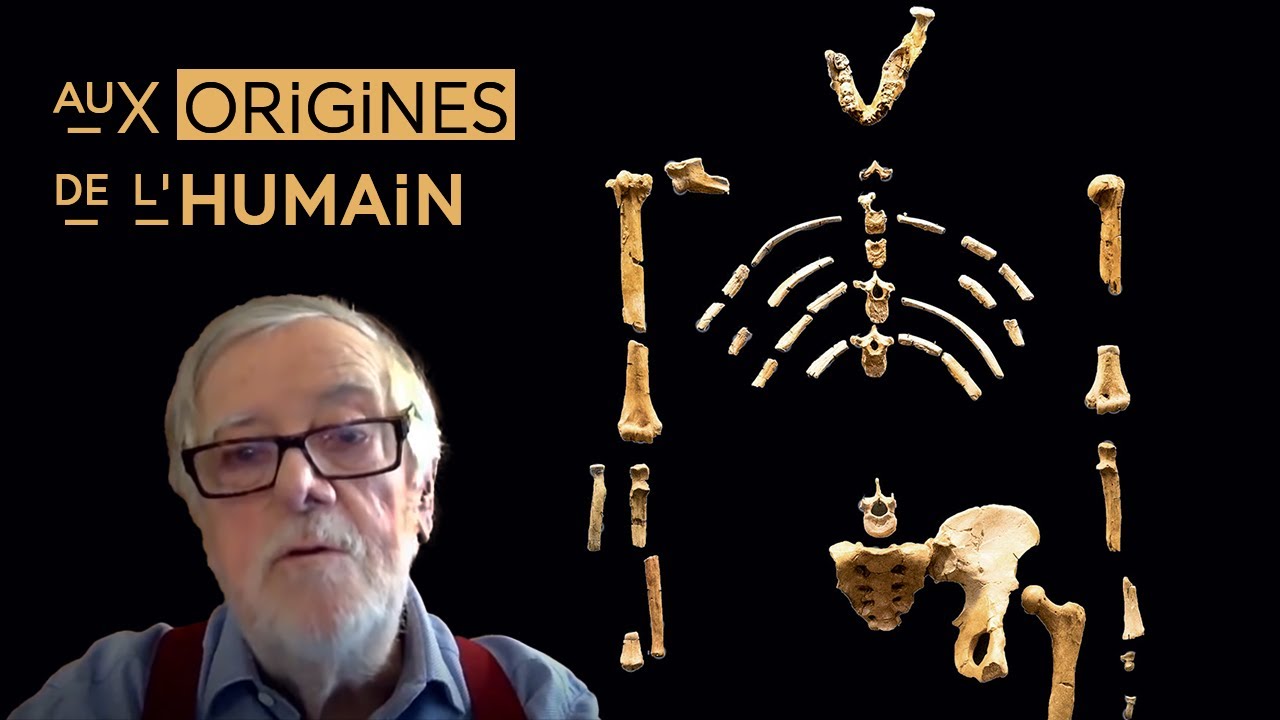
Où, quand, pourquoi, comment est apparu l'Homme ?
Where, when, why, and how did Man appear?
Keywords
Summary
166 words
Critical Evaluation
Value of the Information & Strength of the Argument
The value of the information is exceptionally high, coming from a leading expert in the field. Yves Coppens provides a synthesis of decades of paleoanthropological research, enriched by his own discoveries and interpretations. His argumentation is solid, grounded in fossil evidence and the scientific method. He presents the evolutionary narrative as a series of well-supported hypotheses, such as the correlation between climate change and hominid emergence, while acknowledging ongoing debates and uncertainties. The lecture is not merely a recitation of facts but a reasoned explanation of how our understanding of human origins has been constructed.
Scientific Rigor, Source Quality, Title Accuracy
The scientific rigor is exemplary. Coppens cites specific fossil sites, species, and researchers, demonstrating a deep command of the subject. The sources are not explicitly listed, but the lecture itself is a primary source of expert knowledge, and the description provides links to related playlists from the Musée de l’Homme. The title accurately reflects the content, which systematically addresses the where, when, why, and how of human origins. The lecture is well-structured and maintains a high level of scientific accuracy throughout.
191 words
Title / Content Match
The title accurately reflects the content, which systematically addresses the where, when, why, and how of human origins.
Quality & Reliability
9/10
The lecture is delivered by a renowned paleontologist, Yves Coppens, with decades of field experience and academic authority. The content is based on established scientific knowledge and his own research, presented with appropriate nuance and humility. The video is an official recording by the Musée de l'Homme, ensuring a certain level of editorial quality.
Key Moments
Markers derived by PSI from the transcript: the creator did not define chapters.
- Introduction by Yves Coppens, presenting himself and the topic.
- Overview of the universe's history, from the Big Bang to the formation of Earth and the first cells.
- Discussion of the first vertebrates and their transition from water to land.
- Appearance of mammals and the emergence of primates.
- Classification of primates: prosimians, monkeys, and hominoids.
- Migration of early simians from Asia to Africa and the diversification of hominoids.
- The Miocene epoch and the presence of hominoids in Europe and Africa.
- The emergence of hominids in Africa, including the australopithecines and the discovery of Lucy.
- The appearance of the Homo genus and the savanna hypothesis.
- Conclusion and final remarks on the future of human evolution.
Cited Sources
- Toutes les conférences — Playlist of all conferences from the Musée de l'Homme, including this one.
- Sur l'anthropologie biologique — Playlist on biological anthropology, related to the lecture's topic.
- Sur l'évolution — Playlist on evolution, providing additional context.
Concurring Sources
- Musée de l'Homme — The institution hosting the lecture, known for its scientific rigor.
Contribution & Novelties
This lecture provides a unique and comprehensive synthesis of human origins by one of the field’s most eminent figures. Yves Coppens brings a personal perspective, sharing anecdotes and insights from his own research, including the discovery of Lucy and the development of the savanna hypothesis. The value lies not in new data but in the authoritative and engaging presentation of a complex scientific narrative.
Pour aller plus loin :
- Australopithecus afarensis — The species to which Lucy belongs, a key fossil in understanding human evolution.
- Savanna hypothesis — The idea that human bipedalism evolved as an adaptation to open grasslands, a concept discussed by Coppens.
- Yves Coppens — The lecturer’s biography, providing context for his contributions to paleoanthropology.
118 words
Radar Profile
The radar profile shows high scores across all dimensions, reflecting the lecture's comprehensive coverage, authoritative quality, and technical depth. The slightly lower score for technical level indicates that while the content is scientifically sound, it is presented in an accessible manner for a general audience.
💬 Très positif. Sur les 30 commentaires analysés, tous expriment une profonde gratitude et admiration pour Yves Coppens, saluant sa clarté, son humilité et la richesse de ses connaissances, souvent en lien avec son décès récent.