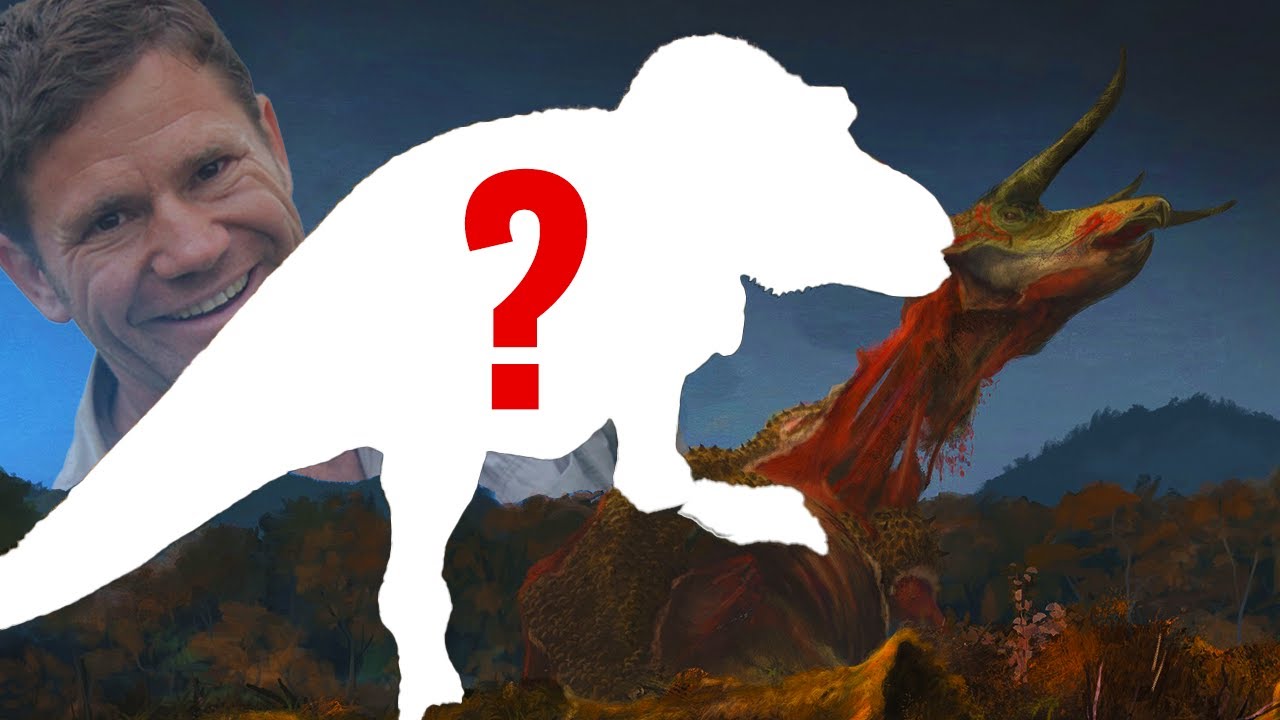
The Deadliest Dinosaur That Ever Lived - With Steve Backshall
Keywords
Summary
126 words
Critical Evaluation
Value of the Information & Strength of the Argument
The video provides substantial value by synthesizing current paleontological knowledge about several dinosaur species, highlighting recent discoveries and ongoing debates. The argumentation is solid, with each presenter supporting their choices with specific anatomical and behavioral evidence, and acknowledging uncertainties where they exist. Steve Backshall adds practical perspective from his experience with modern wildlife, drawing parallels that help contextualize the potential dangers of these prehistoric animals. The discussion is well-structured, moving from individual species to broader ecological considerations, and the final decision is justified with a comprehensive rationale.
Scientific Rigor, Source Quality, Title Accuracy
The scientific rigor is high, with references to peer-reviewed studies and recent research findings. The sources cited are reputable academic journals and publications, and the presenters are careful to distinguish between established facts and speculation. The title accurately reflects the content, which is a debate about the deadliest dinosaur, and the inclusion of Steve Backshall as a guest is appropriately highlighted. The video maintains a good balance between entertainment and scientific accuracy, making it accessible without compromising on detail.
181 words
Title / Content Match
The title accurately reflects the content, which is a discussion and debate about which dinosaur was the deadliest, featuring Steve Backshall.
Quality & Reliability
8/10
The video features a panel of science communicators and a wildlife expert, discussing paleontological evidence with references to peer-reviewed studies. The information is presented with appropriate caveats about speculation, and the sources cited are reputable academic journals.
Chapters
Cited Sources
- Carnotaurus: A fast-running abelisaurid from the Late Cretaceous — Cited in the discussion of Carnotaurus's speed and anatomy.
- Anodontosaurus: Ankylosaur tail club morphology — Cited in the discussion of Anodontosaurus's tail club.
- Maip macrothorax: A new megaraptoran from Patagonia — Cited in the discussion of Maip macrothorax.
- Mapusaurus: A new carcharodontosaurid from Argentina — Cited in the discussion of Mapusaurus and its potential pack hunting.
- Centrosaurus: Bonebed evidence for herding behavior — Cited in the discussion of Centrosaurus's herding behavior.
- Utahraptor: The largest dromaeosaur — Cited in the discussion of Utahraptor's size and anatomy.
- Argentinosaurus: Size estimates and ecology — Cited in the discussion of Argentinosaurus's size.
- Spinosaurus: Aquatic adaptations — Cited in the discussion of Spinosaurus's aquatic lifestyle.
- Tyrannosaurus rex: Bite force and feeding behavior — Cited in the discussion of T. rex's bite force.
Concurring Sources
- Carnotaurus sastrei: A fast-running abelisaurid — Supports the discussion of Carnotaurus's speed and anatomy.
- Anodontosaurus: Tail club function — Supports the discussion of ankylosaur tail club use in intraspecific combat.
- Maip macrothorax: Anatomy and phylogenetic position — Supports the discussion of Maip's anatomy.
- Mapusaurus: Bonebed and potential pack hunting — Supports the discussion of Mapusaurus's potential pack hunting.
- Centrosaurus: Herding behavior — Supports the discussion of Centrosaurus's herding behavior.
- Utahraptor: Anatomy and size — Supports the discussion of Utahraptor's size and anatomy.
- Argentinosaurus: Size estimates — Supports the discussion of Argentinosaurus's size.
- Spinosaurus: Aquatic adaptations — Supports the discussion of Spinosaurus's aquatic lifestyle.
- Tyrannosaurus rex: Bite force and feeding behavior — Supports the discussion of T. rex's bite force.
Dissenting Sources
- Spinosaurus: Terrestrial vs. aquatic — This source presents a different perspective on Spinosaurus's lifestyle, suggesting it may have been more terrestrial than aquatic, which contrasts with the video's emphasis on its aquatic adaptations.
External References
Contribution & Novelties
The video offers a unique format by combining a panel discussion with expert commentary, providing a multifaceted view of what makes a dinosaur ‘deadly’. It highlights recent discoveries and ongoing debates, such as the potential pack hunting of Mapusaurus and the aquatic adaptations of Spinosaurus. The inclusion of Steve Backshall’s perspective from modern wildlife adds a practical dimension to the discussion.
Pour aller plus loin :
- Dromaeosauridae — Overview of the family including Utahraptor.
- Tyrannosaurus — Detailed information on T. rex.
- Spinosauridae — Family of Spinosaurus.
- Titanosauria — Group including Argentinosaurus.
- Ankylosauria — Group including Anodontosaurus.
96 words
Radar Profile
The radar profile shows high scores in information quantity and quality, reflecting the video's rich content and scientific grounding. The technical level is moderate, making it accessible to a general audience while still providing depth. Overall reliability is strong, supported by cited sources and expert commentary.
💬 Très positif. Sur les 30 commentaires analysés, les spectateurs expriment un fort enthousiasme pour la collaboration avec Steve Backshall et apprécient l'équilibre entre humour et contenu éducatif.