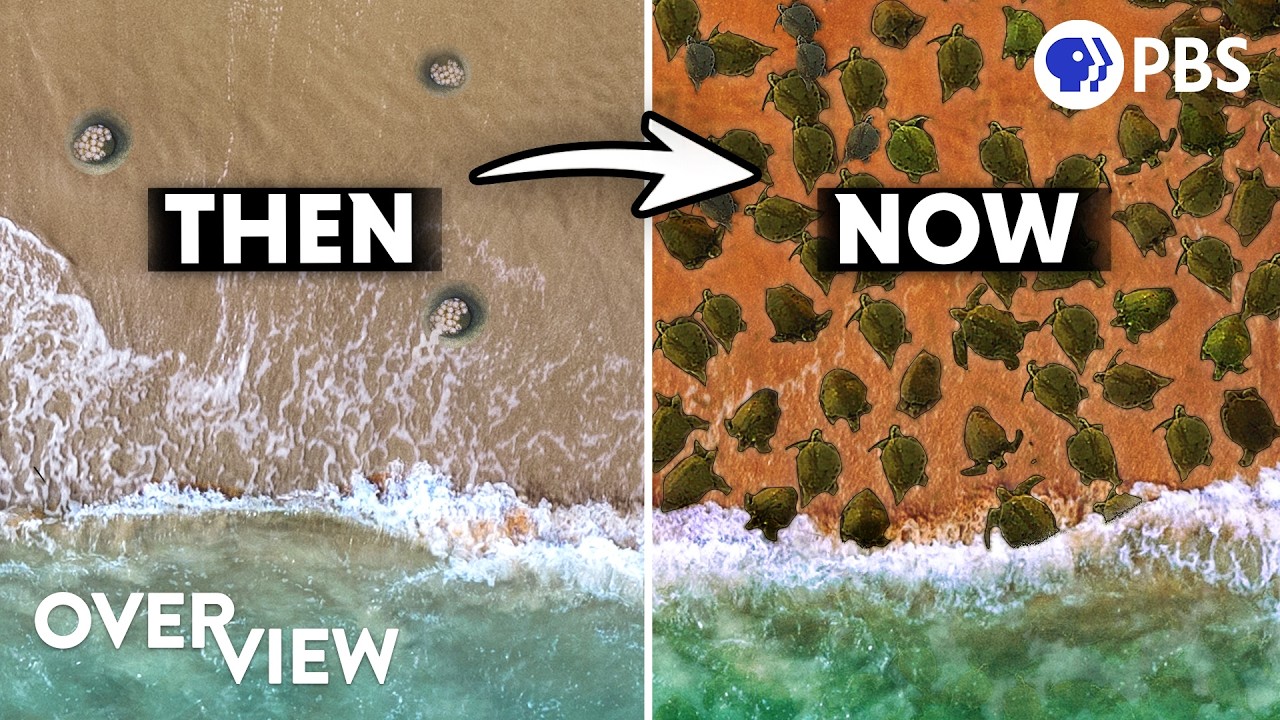
How Stealing Endangered Turtle Eggs Saved Them From Extinction
Keywords
Summary
161 words
Critical Evaluation
Value of the Information & Strength of the Argument
The video provides valuable insights into a lesser-known conservation model, effectively explaining the ecological rationale behind egg harvesting. The argumentation is clear and logically structured, presenting the high egg mortality rate as the key justification for the harvest. It successfully conveys the importance of community involvement and economic incentives in conservation. However, the video could have strengthened its argument by addressing potential criticisms, such as the ethical implications of consuming endangered species’ eggs, and by providing more scientific data on the long-term impact of the harvest on turtle populations.
Scientific Rigor, Source Quality, Title Accuracy
The video maintains a high level of scientific rigor, with accurate explanations of turtle biology and conservation challenges. It features interviews with local experts and community members, adding credibility. However, it does not cite specific scientific studies or provide references in the description, which limits its utility for viewers seeking further information. The title accurately reflects the content, and the video’s production quality is high, with clear visuals and narration. The public comments generally praise the video’s educational value, though some note a lack of depth on certain aspects, such as the magnetic navigation mechanism.
199 words
Title / Content Match
The title accurately reflects the video's content, which explains how the legal harvest of turtle eggs in Ostional, Costa Rica, contributes to conservation.
Quality & Reliability
8/10
The video is produced by PBS Terra, a reputable science communication channel, and features expert commentary from Dr. Joe Hanson. It presents a well-documented conservation strategy with clear explanations of the ecological rationale. However, it lacks in-depth scientific citations and does not address potential criticisms or alternative viewpoints in detail.
Key Moments
Markers derived by PSI from the transcript: the creator did not define chapters.
- Introduction to the arribada phenomenon in Costa Rica.
- Explanation of the threats facing sea turtles and the conservation challenge.
- Description of the egg destruction by later-nesting turtles and the idea for harvesting.
- Interview with local community members about the egg harvest and its benefits.
- Discussion of the magnetic imprinting hypothesis for turtle navigation.
- Conclusion on the success of community-based conservation in Ostional.
Cited Sources
- PBS Terra Donation Page — Support for PBS Member Stations, mentioned in the video description.
Concurring Sources
- Olive ridley sea turtle — Provides background on the species and its conservation status, supporting the video's claims.
- Arribada — Describes the mass nesting behavior, confirming the phenomenon's significance.
Dissenting Sources
- Criticism of egg harvesting — Some conservationists argue that any harvest of endangered species' eggs is unethical and could undermine conservation efforts, though this view is not presented in the video.
Contribution & Novelties
The video offers a fresh perspective on conservation by highlighting a successful community-based model that aligns economic incentives with wildlife protection. It challenges the conventional view that conservation must exclude human use, instead demonstrating a symbiotic relationship. The concept of ‘sustainable use’ as a conservation tool is not new, but this case study provides a compelling example.
Pour aller plus loin :
- Olive ridley sea turtle — Provides detailed information on the species, its distribution, and conservation status.
- Arribada — Explains the mass nesting phenomenon and its occurrence in various locations.
- Community-based conservation — Discusses the broader concept of involving local communities in conservation efforts.
- Magnetite in animals — Explains the role of magnetite in animal navigation, relevant to the magnetic imprinting hypothesis.
123 words
Radar Profile
The radar profile shows high scores in information quality and reliability, reflecting the video's strong scientific foundation and reputable source. The moderate scores in quantity and technical level indicate that while the video is informative, it could provide more in-depth data and address technical aspects more thoroughly.
💬 Très positif. Sur les 30 commentaires analysés, la majorité exprime un soutien enthousiaste au modèle de conservation présenté, avec plusieurs témoignages personnels de volontaires et de locaux confirmant l'efficacité de l'approche.