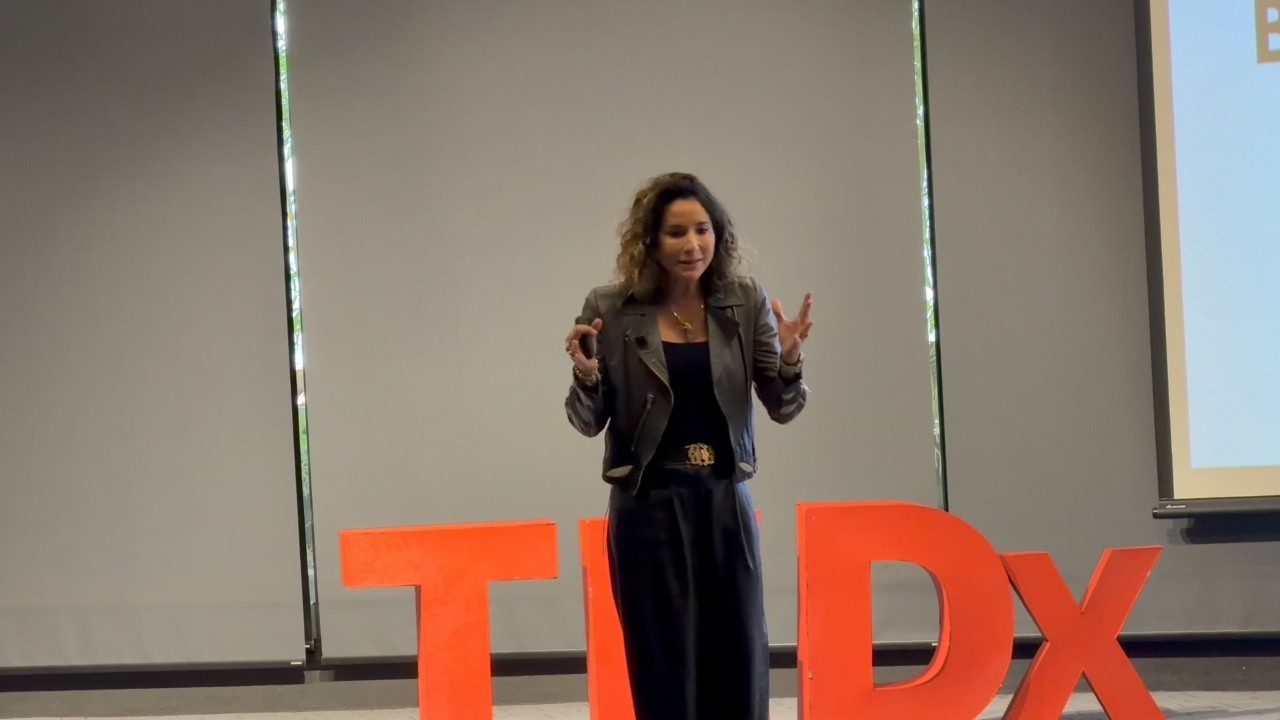
"Es tiempo, no dinero" | Paulina Yazigi | TEDxPUC de Chile
"It’s Time, Not Money" | Paulina Yazigi | TEDxPUC de Chile
Keywords
Summary
193 words
Critical Evaluation
Value of the Information & Strength of the Argument
The talk offers a valuable perspective by reframing economic and financial concepts through the lens of time, making abstract ideas like public debt and growth more tangible. The argumentation is persuasive, using relatable examples and a clear logical progression from personal to macro to future scenarios. However, the reasoning sometimes relies on oversimplifications and lacks rigorous data or citations, which weakens the scientific depth.
Scientific Rigor, Source Quality, Title Accuracy
The speaker, an economist with a strong professional background, provides credibility, but the talk does not cite specific sources or studies. The title accurately reflects the content, and the talk is well-structured. The lack of references and the use of anecdotal evidence limit the scientific rigor, though the macro data points (e.g., debt-to-GDP ratios) are plausible.
135 words
Title / Content Match
The title accurately reflects the core message: time is more valuable than money.
Quality & Reliability
7/10
The talk is an opinion-based reflection by a qualified economist, but it lacks citations and relies on personal anecdotes and a few macro data points. The argument is coherent but not rigorously sourced.
Key Moments
Markers derived by PSI from the transcript: the creator did not define chapters.
- Introduction: time vs. money, personal anecdote about gift exchange.
- Macroeconomic perspective: public debt as future working hours.
- Banks as time managers, credit as time advancement.
- Technology and apps reallocating time, social media consuming time.
- Future of AI and abundance, questioning economics, life expectancy and longevity escape velocity.
- Conclusion: 'In Time' film, inequality, and final reflection.
Cited Sources
- TEDx Program — Mentioned as the event organizer.
Concurring Sources
- TEDx Program — The talk is part of the TEDx series, which aligns with its format and purpose.
Contribution & Novelties
The talk offers a fresh perspective by consistently framing economic and financial issues in terms of time rather than money, making complex concepts more accessible. It connects personal choices, macroeconomics, and future technological scenarios in a coherent narrative.
Pour aller plus loin :
- Time value of money — Core financial concept related to the talk’s theme.
- Longevity escape velocity — Concept mentioned in the talk about extending life expectancy.
- In Time (film) — Film referenced to illustrate a time-based economy.
80 words
Radar Profile
The radar profile shows moderate scores across all dimensions, with slightly higher quality of information and lower technical level, reflecting an accessible yet substantive talk.