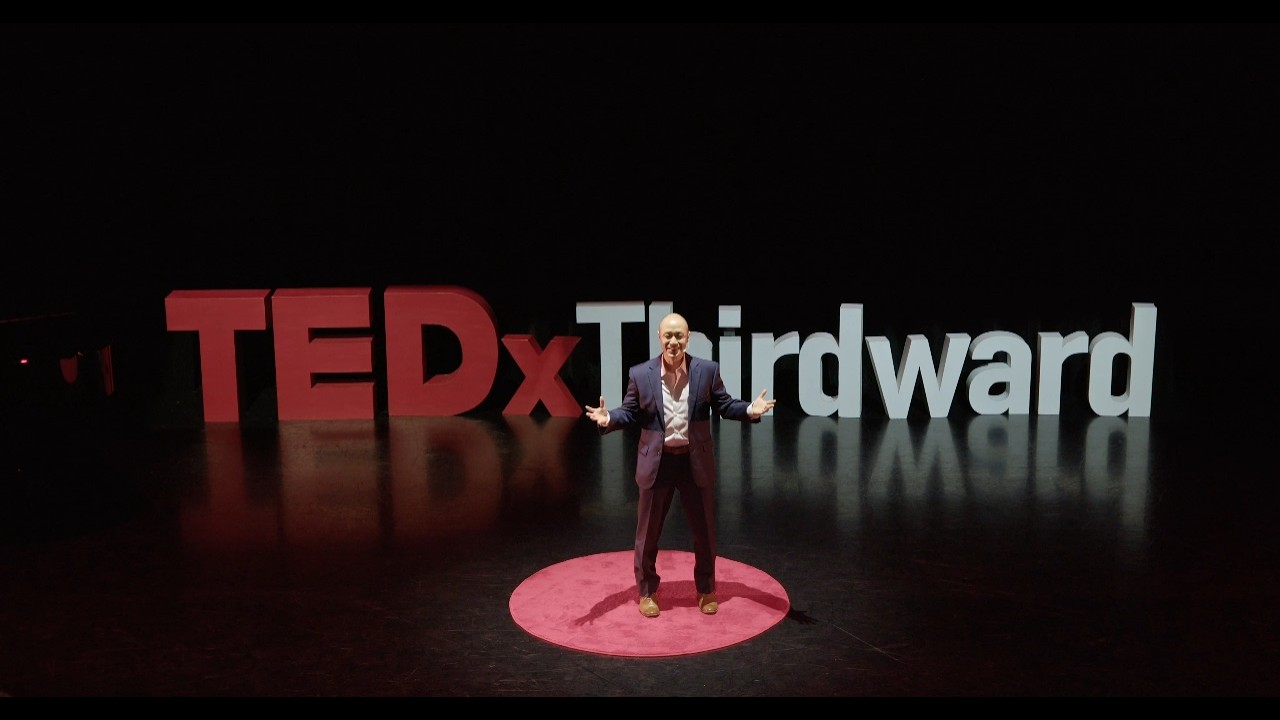
Why AI Will End the Attention Economy | Christopher Loo | TEDxThird Ward Salon
Keywords
Summary
137 words
Critical Evaluation
Value of the Information & Strength of the Argument
The talk offers a compelling narrative about the shift from attention to authority, but its value is limited by a lack of empirical evidence. The argument is built on personal experience and anecdotal examples, which makes it relatable but not scientifically rigorous. The speaker’s journey from medicine to podcasting provides a unique perspective, but the claims about AI’s impact on discovery and trust are not backed by data or studies. The argumentation is logical and coherent, but it relies heavily on the speaker’s authority rather than objective analysis.
Scientific Rigor, Source Quality, Title Accuracy
The talk lacks scientific rigor, as it does not cite any studies or data to support its claims. The speaker’s personal experiences are presented as evidence, but they are not generalizable. The title accurately reflects the content, which is a speculative opinion about the future of the attention economy. The talk is more of a motivational speech than a scientific analysis, and it does not engage with counterarguments or alternative perspectives.
174 words
Title / Content Match
The title accurately reflects the core thesis of the talk, which argues that AI will shift the focus from attention to authority.
Quality & Reliability
6/10
The talk is an opinion piece based on personal experience and anecdotal evidence. It lacks empirical data or citations, but the speaker's background as a physician and entrepreneur adds some credibility. The argument is coherent but not rigorously supported.
Key Moments
Markers derived by PSI from the transcript: the creator did not define chapters.
- Introduction: The attention economy is a system that rewards popularity over everything else.
- Personal story: Leaving medicine during the 2008 financial crisis.
- The problem: Fake news, bullying, and fraud are products of the attention economy.
- The shift: From SEO to AEO (Answer Engine Optimization).
- Examples: Jason the influencer vs. Priya the startup founder.
- Conclusion: Build something that lasts, not something that goes viral.
Cited Sources
- TEDx Program — The talk was given at a TEDx event, and this link provides information about the TEDx program.
Concurring Sources
- TEDx Program — The talk is part of the TEDx series, which is known for sharing ideas worth spreading.
Contribution & Novelties
The talk offers a novel perspective on the impact of AI on content discovery and authority, but it is not based on original research. It synthesizes existing ideas about AI and digital marketing into a compelling narrative.
Pour aller plus loin :
- Answer Engine Optimization — A related concept, though AEO is a newer term, this provides background on SEO.
- Attention economy — The concept of attention as a scarce resource.
- Artificial intelligence — The technology driving the shift.
79 words
Radar Profile
The radar profile shows moderate scores across all dimensions, indicating a balanced but not exceptional talk. The highest score is in quality of information, reflecting the coherent argument, while the lowest is in technical level, as the talk is accessible to a general audience.