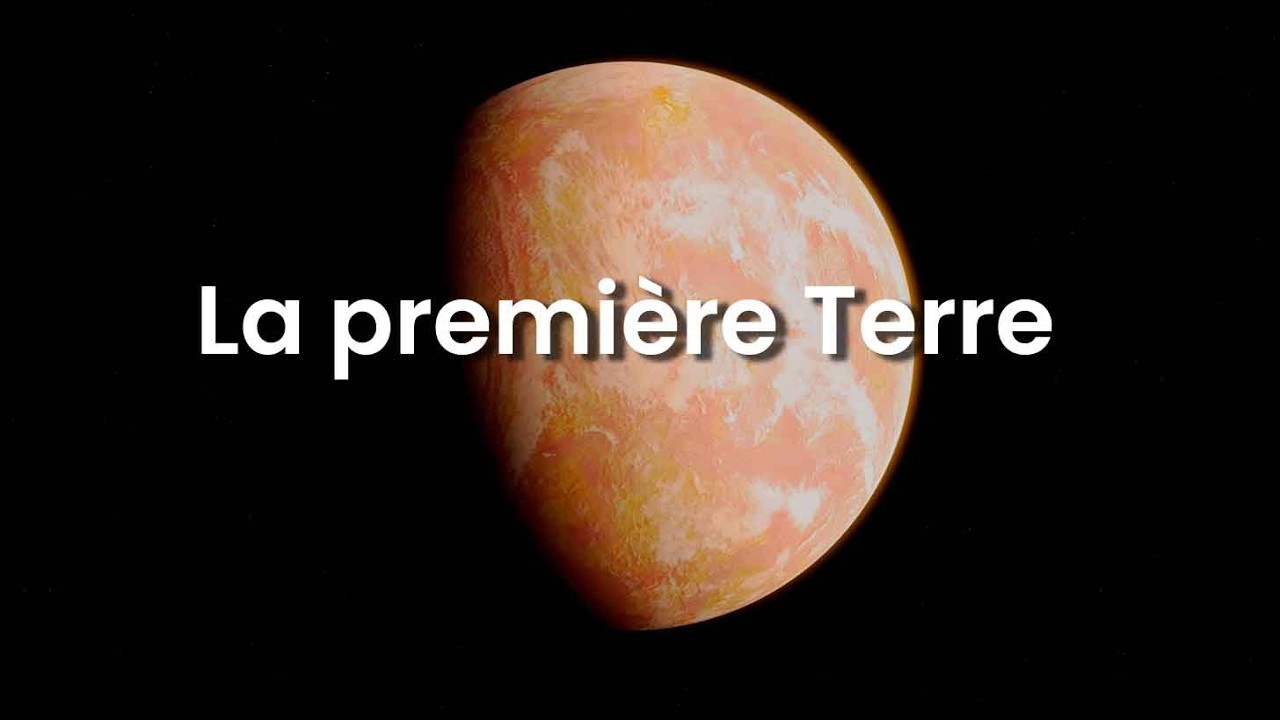
This documentary explores the early history of Earth, from its formation 4.53 billion years ago through the Hadean and Archean eons. It describes the planet's initial molten state, the formation of the Moon via a giant impact, the development of a thick atmosphere, and the eventual condensation of oceans. The video covers the intense volcanic activity, hydrothermal systems, and the Late Heavy Bombardment. It discusses the emergence of life, the Great Oxidation Event, and the evidence preserved in zircons and lunar samples. The narrative is supported by interviews with researcher Franck Selsis and references to the book 'Le grand livre de l'exobiologie'. The video aims to provide a vivid, scientifically grounded reconstruction of Earth's early environments.
Critical Evaluation
The video presents a comprehensive and engaging overview of early Earth history, drawing on current scientific knowledge. The collaboration with Franck Selsis, a CNRS researcher, lends credibility to the content. The narrative is well-structured, moving chronologically from the Hadean to the Archean, and covers key events such as the Moon-forming impact, the formation of the first continents, and the rise of oxygen. The use of AI-generated imagery is acknowledged, which is transparent but may introduce inaccuracies in visual details. The video relies on established scientific concepts (e.g., zircon dating, hydrothermal vent chemistry) and references the book 'Le grand livre de l'exobiologie' as a source. However, specific primary sources are not cited in the video itself; the description provides links to the YouTube playlist and the origins program website, but not to individual scientific papers. The discussion with Franck Selsis adds depth, exploring alternative scenarios for life's origin. The video's strength lies in its ability to synthesize complex information into an accessible narrative without oversimplifying. Potential weaknesses include the lack of explicit citations for specific claims and the reliance on AI-generated visuals, which may not be scientifically precise. Overall, the video is a valuable educational resource for those interested in planetary science and the origins of life, though viewers seeking rigorous citations should consult the referenced book and scientific literature.
The video provides a vivid, narrative-driven reconstruction of Earth's early history, integrating recent scientific findings and expert commentary. It stands out for its cinematic approach and collaboration with a CNRS researcher, making complex topics accessible. The discussion of alternative scenarios for life's origin adds depth.
Pour mieux comprendre :
- Hadean Eon — Overview of the earliest geological eon of Earth.
- Great Oxidation Event — Explanation of the rise of atmospheric oxygen.
- Zircon — Mineral used to date early Earth rocks.
Radar Profile
The radar profile shows high scores in quantity and quality of information, reflecting the video's comprehensive coverage and expert input. The technical level is moderate, suitable for a general audience, while reliability is strong due to scientific backing. The overall balance indicates a well-produced educational documentary.